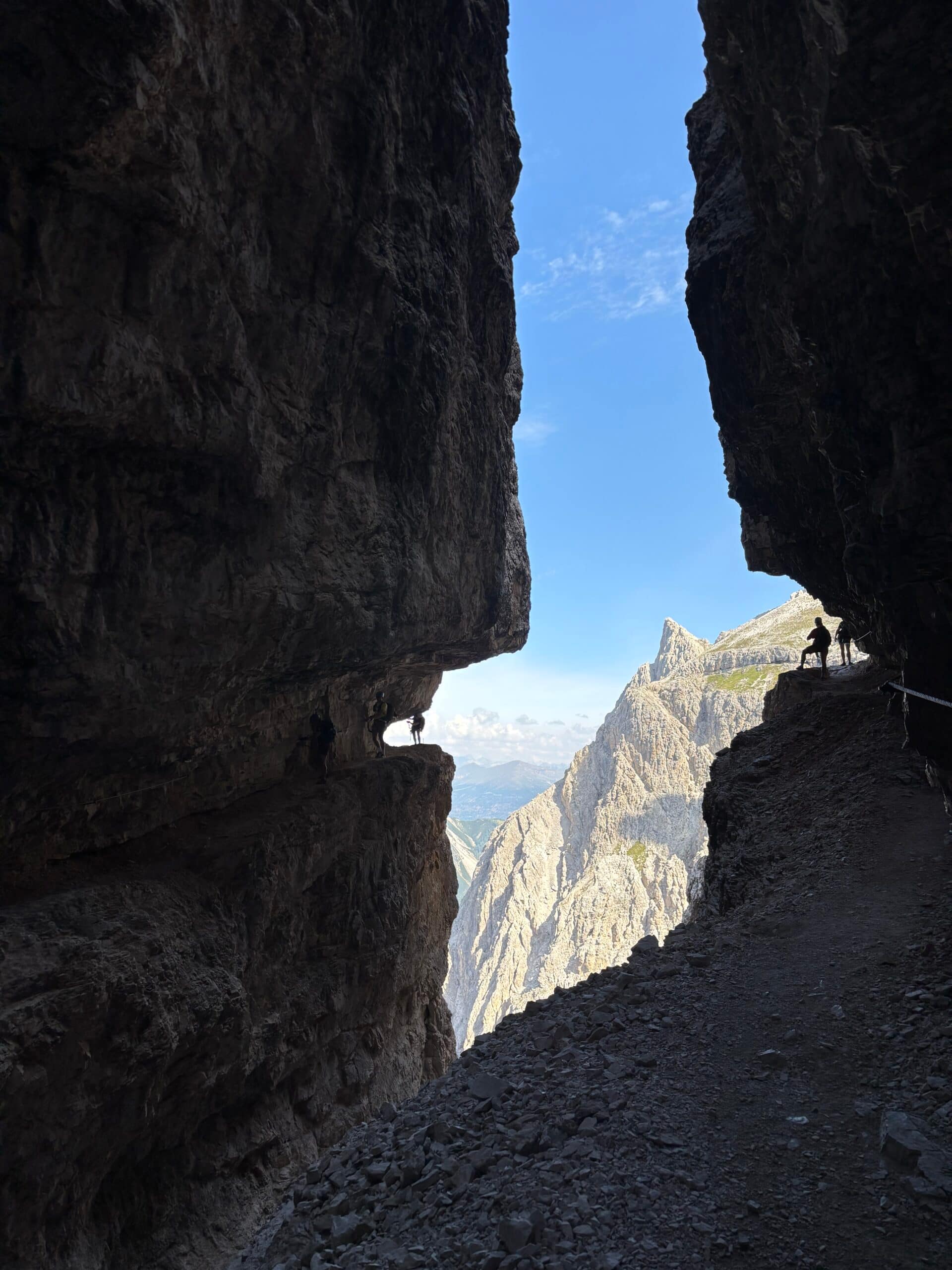
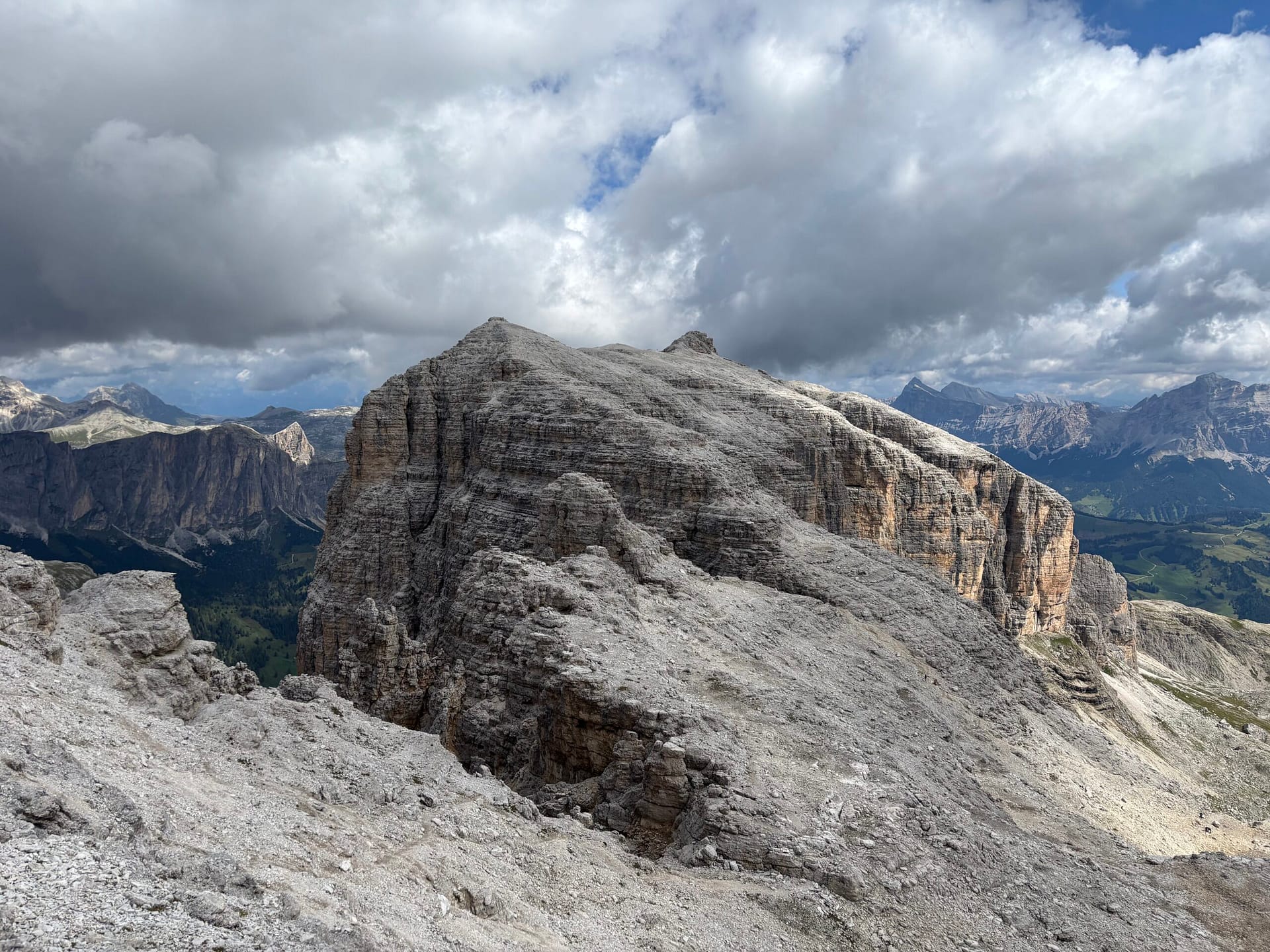

Via ferrata Vallon is a breathtaking route in the Italian Dolomites. It leads to the summit of Piz Boè, known as the easiest 3,000 m peak in the Dolomites due to cable car access. However, taking the via ferrata Vallon is much more scenic and adventurous path, that is often overlooked. If you are looking for an “off the beaten track” itinerary to Piz Boè – this one is definitely for you!
General Information about Via Ferrata Vallon
📍 Location: Sella Dolomites, Italy
| 🧗♀️ Difficulty | ⏰ Duration | 📏 Total distance | 📈 Elevation gain | 🔗 Wire length |
| B/C | 5 h (total loop) | 8 km | 600 m | 200 m |
- ⛰️ Highest Point: Piz Boè (3,152 m)
- 🪢 Equipment & Preparation: For more information on via ferrata difficulty levels, required gear and preparation, read our article: Via Ferrata: What You Need to Know Before Starting.
Via Ferrata Vallon Map
Via Ferrata Vallon: How to Get There
🅿️ Parking: Alta Badia ski resort parking lot.
The fastest way to get to the via ferrata Vallon is from the village of Corvara in Badia. It’s the main ski village in the area, therefore has multiple ski lifts taking off from it.
To access via ferrata Vallon you need to take the Boe Gondola, then the Vallon chairlift. Top of the station is situated next to Rifugio Kostner. For the gondola and chairlift operating times see the Moviment Alta Badia web page.
Accommodation
Corvara in Badia and the surrounding villages are popular, so they can get busy and expensive. For a budget stay I suggest exploring places 1 hour drive from the via ferratas you want to do. During my visit I have stayed in town called Le Grazie and traveled from there to Via Ferrata Vallon, Via Ferrata Santner and routes around Cinque Torri.


Via Ferrata Vallon: Stages and Progression
Stage 1: Approach
The trail begins at the top of the Vallon chairlift. Head towards Rifugio Kostner and join the path 638. From there turn right onto a smaller path. Look for signs indicating Vallon via ferrata, or Valun. Follow the path and look for red markings.
Stage 2: Via Ferrata Vallon
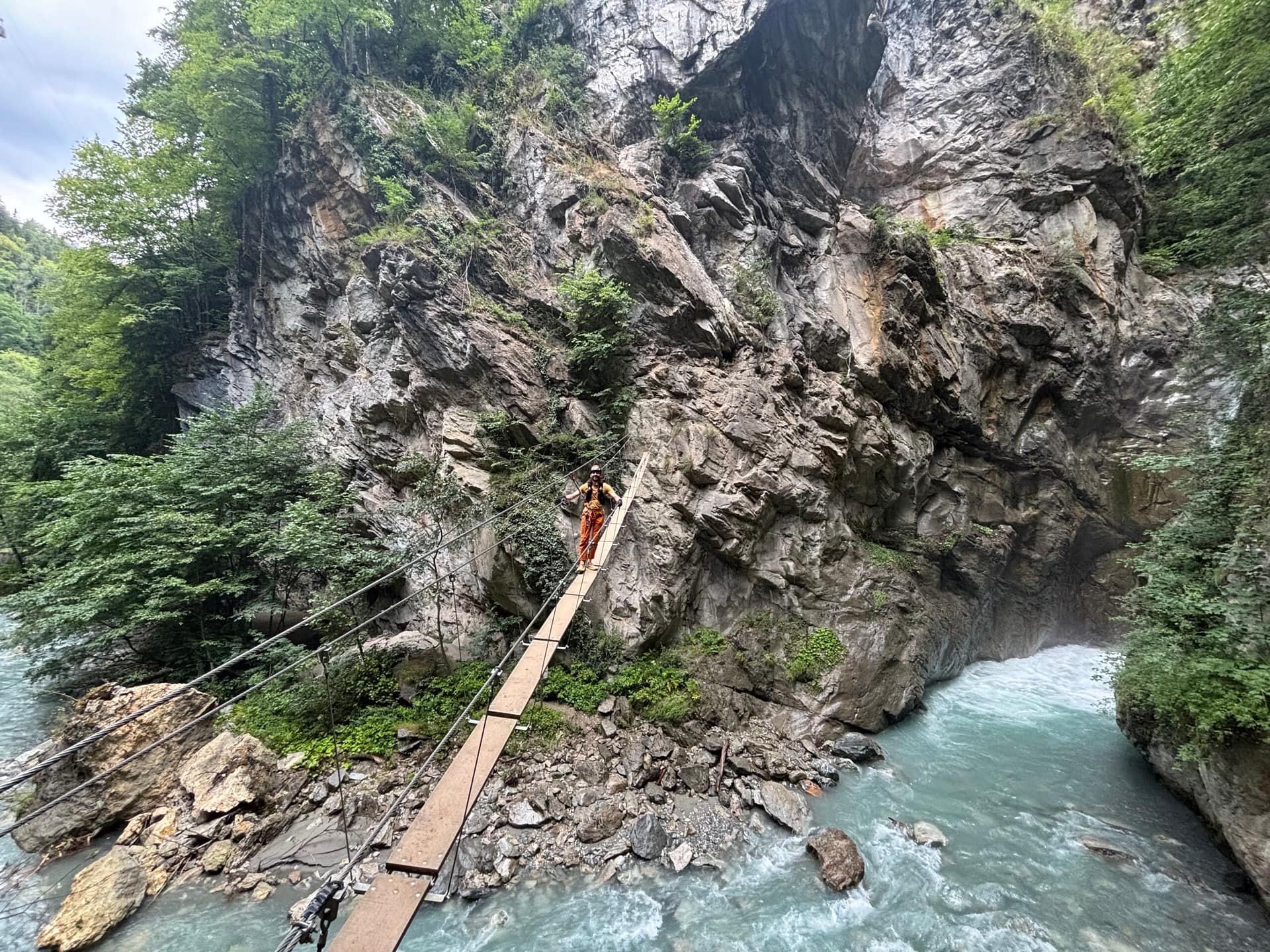
After about 45 minutes you will reach the start of the wire. The via ferrata starts off easy and leads through an amazing suspension bridge next to a waterfall. After crossing the bridge the route becomes steeper and you will find yourself holding tight to the rocks and the wires.

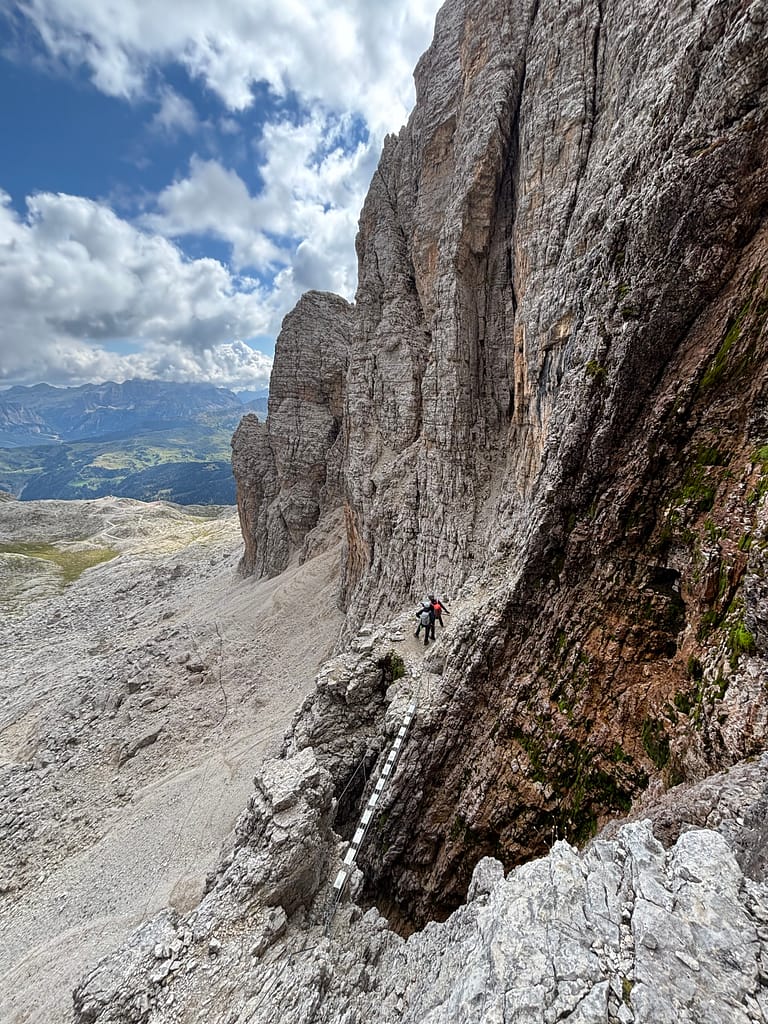
In about an hour you will exit at a col between Sasso delle Nove and Cima del Vallon. The views from up there are amazing!
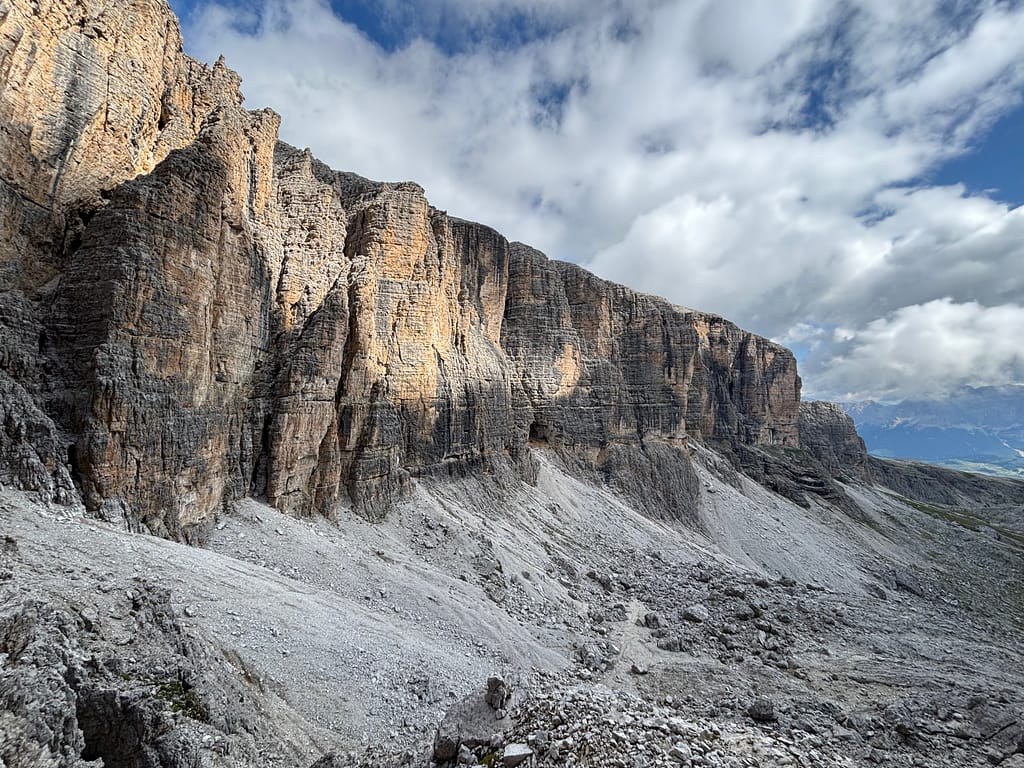
Stage 3: Path to Piz Boè Summit
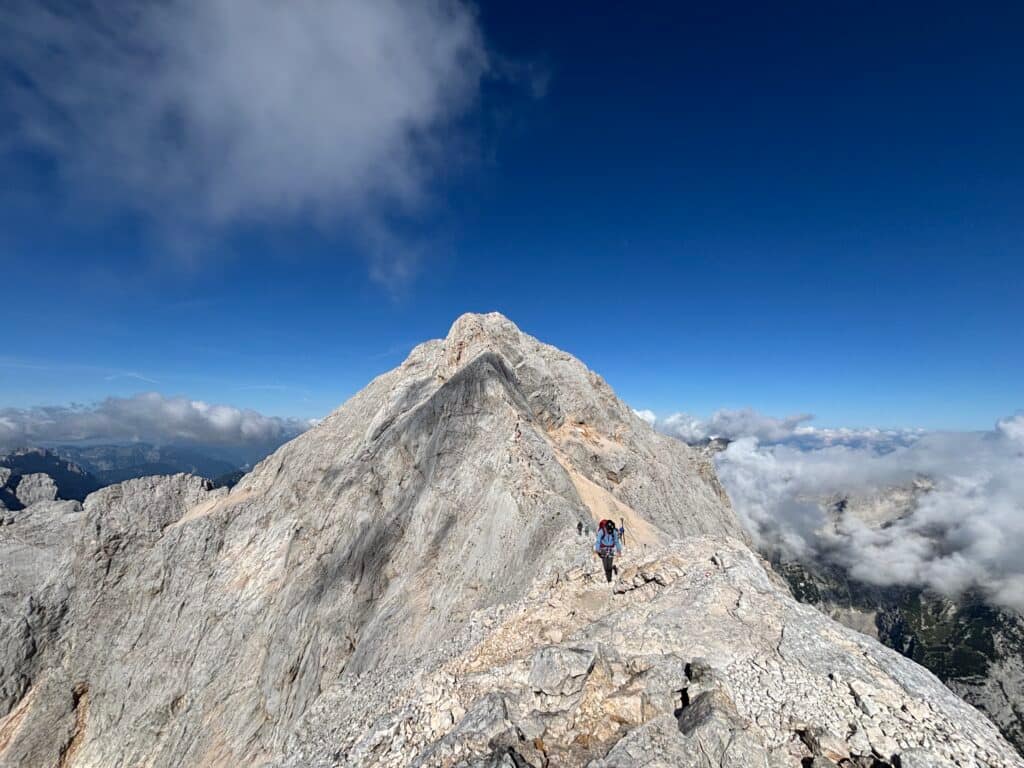
After finishing the via ferrata continue upwards, following faint red waymarks along the lunar landscape of the Cresta Strenta. It had this lunar feeling not only because of the view, but because there were no other people on the trail beside our group! What a luxury to have in busy Dolomites.
During our hike we kept the via ferrata gear on until the very summit of Piz Boe. There were some sections with wires but the trail was not too exposed so the via ferrata safety kit was not really necessary. The cables are there in case of strong wind or slippery rock.
Piz Boe summit was very busy as there are multiple ways to access it. Also, at the very top of it there is a Rifugio Capanna Piz Fassa. We sat down for lunch there. The Rifugio was incredibly busy too, but once we got food – it was delicious. To truly enjoy the luxury of an empty trail aim to catch the very first gondola from Corvara. By the time the midday crowds arrive to the summit from other directions, you will already be halfway through your lunch.
Fun Fact: Keep an eye on the rocks as you cross the Cresta Strenta plateau. This area was once a prehistoric seabed and if you look closely – you can often find tiny marine fossils embedded in the limestone. Just make sure to you leave them there – Dolomites are UNESCO World Heritage site and it’s strictly illegal to remove fossils.


Stage 4: Descent
From the summit of Piz Boè the recommended descent route is via path 638. This is a hiking path down that leads back to Rifugio Kostner and makes the route a nice loop. The descent opens up the views of Marmolada Dolomites and the only real Glacier sitting on the top. The views are spectacular!
While path 638 is a great loop, be also prepared for some loose scree on the way down. Trekking poles, while not needed for the via ferrata section, are a lifesaver while descending.
After reaching Rifugio Kostner head back to Vallon lifts system and descend back to the parking lot.

What is your favorite via ferrata in the Sella Dolomites? Share in the comments below!
On Life and Mountains