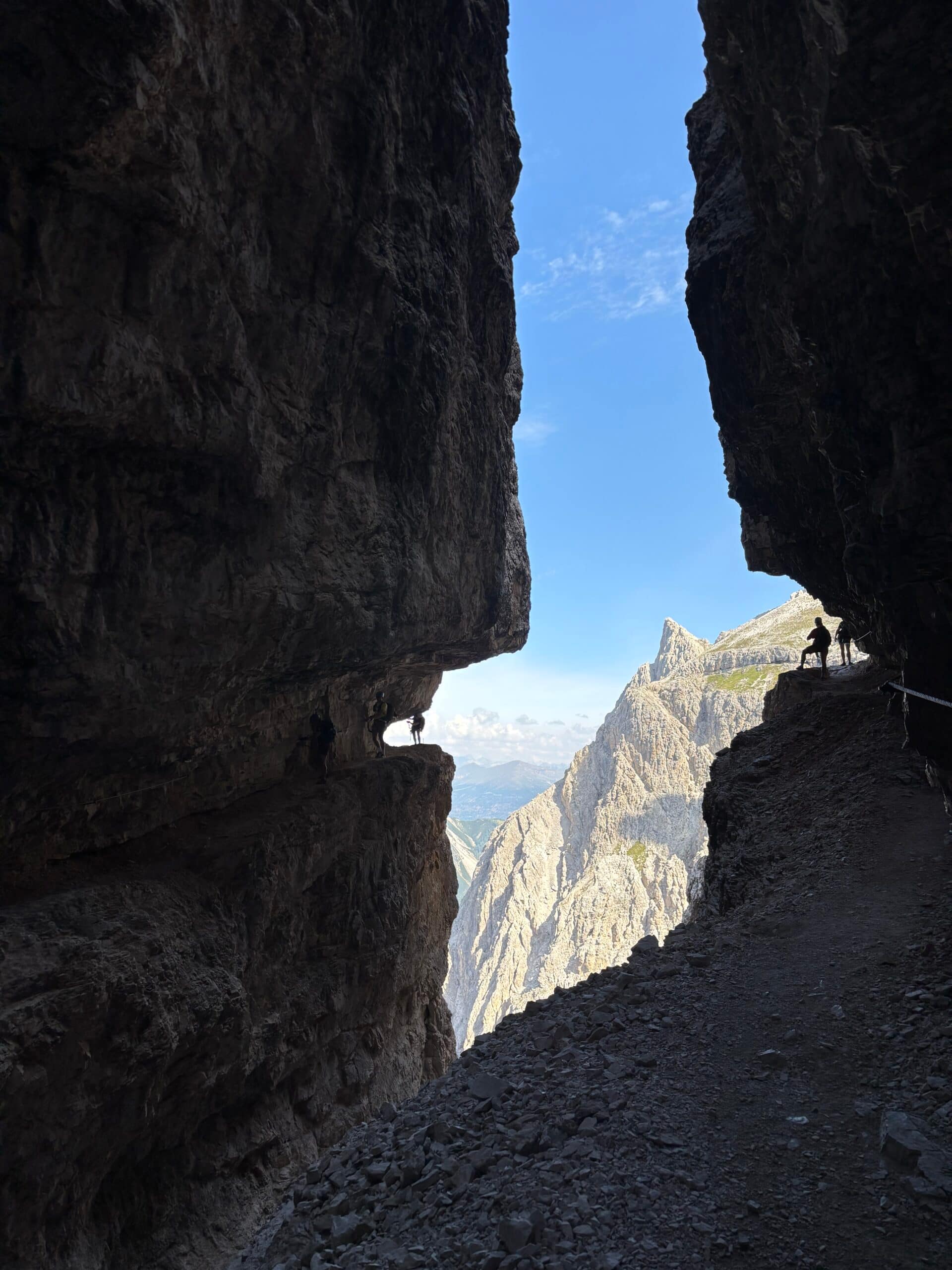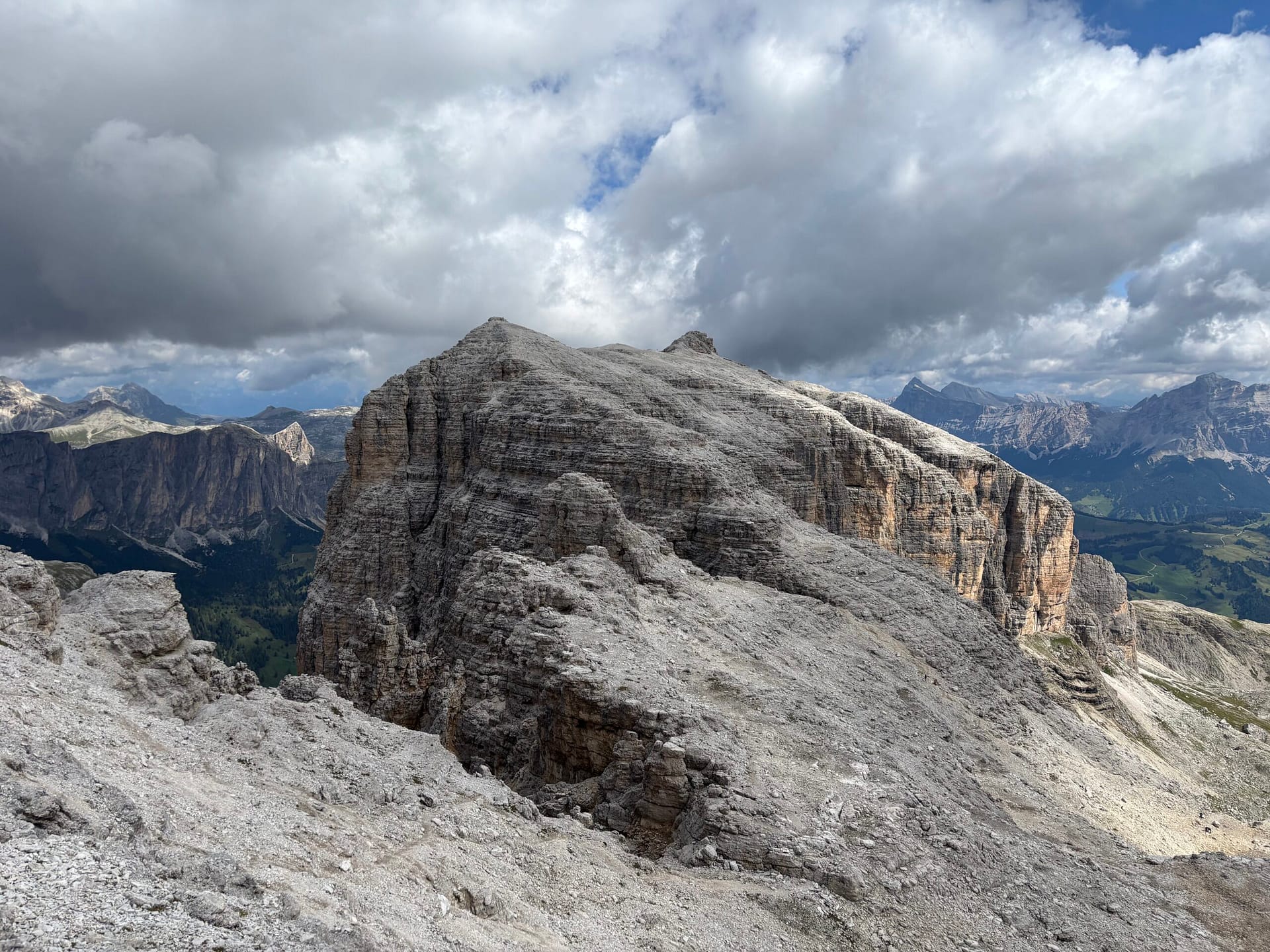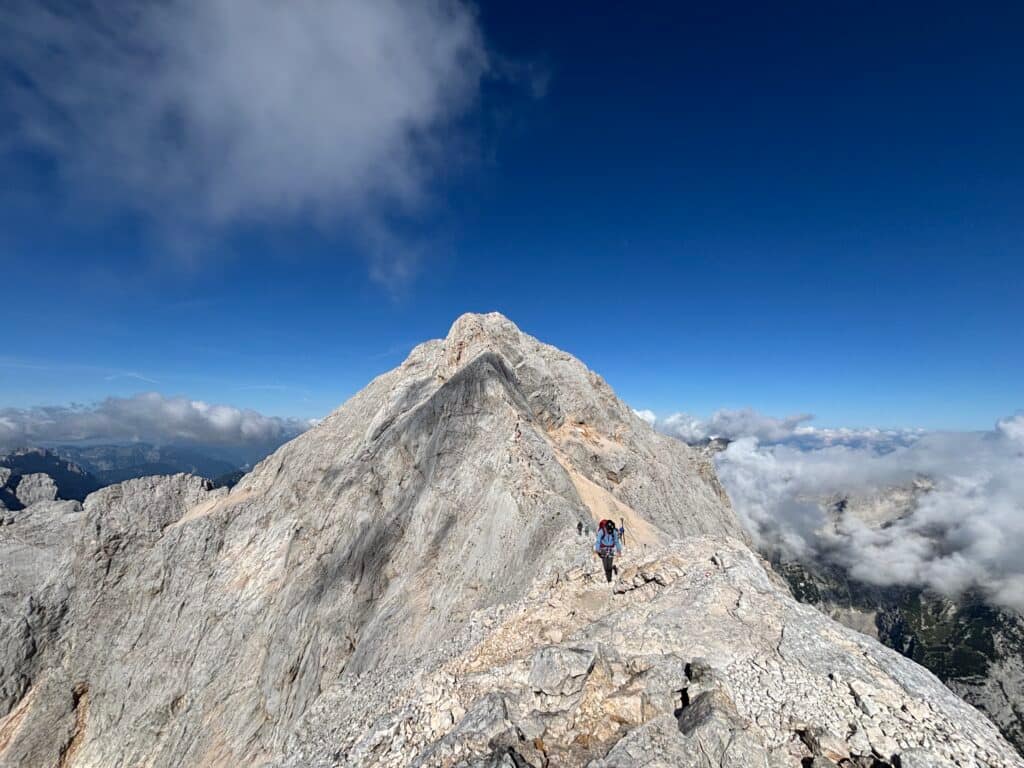
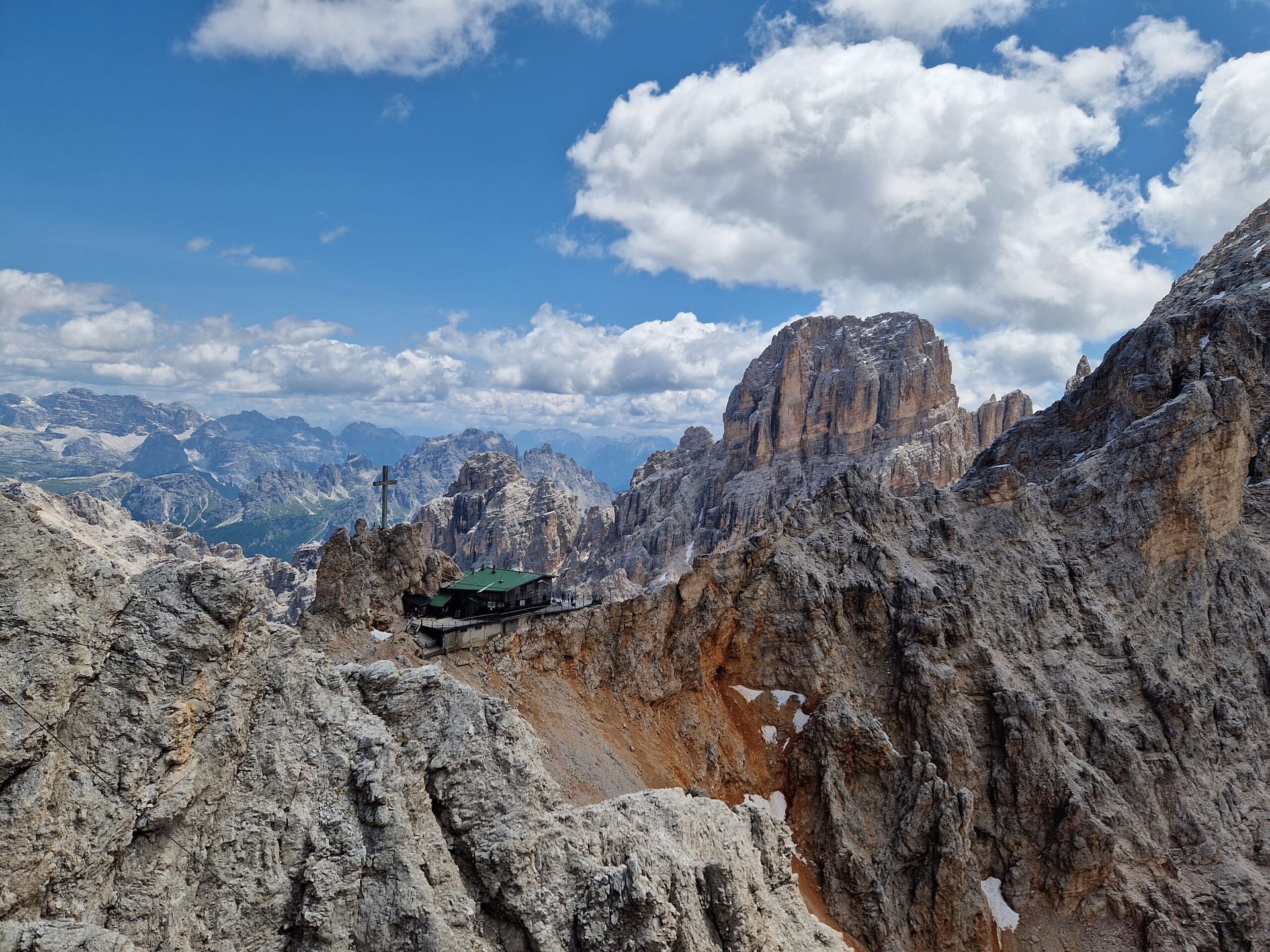

Via ferrata Ivano Dibona is one of the most iconic routes in the Cristallo mountain group. It’s famous for it’s suspension bridge Ponte Cristallo, which you might recognise from the movie Cliffhanger. This 7-8 hour hike near Cortina d’Ampezzo allows you to follow the footsteps of World War I soldiers, admire the unique landscapes of the Dolomites and reach the 3,008m summit of Cristallino d’Ampezzo. In this blog post you will find a detailed plan for the 13 km route, tips on lifts, logistics, and important warnings.
General Information
📍 Location: Cristallo Dolomites, Italy
| 🧗♀️ Difficulty | ⏰ Duration | 📏 Total distance | 📈 Elevation gain | 🔗 Wire length |
| B | 7-8h | 13 km | 850 m | 500 m |
- ⛰️ Highest point: Cristallino d’Ampezzo (3,008 m)
- 🅿️ Where to park? Parcheggio pubblico gratuito Rio Gere
- 🚌 Arriving by bus: The most convenient way to reach this ferrata is from the town of Cortina d’Ampezzo. Choose a bus heading towards Passo Tre Croci / Misurina / Auronzo and ask the driver to stop at the Rio Gere lift, as not all buses make the scheduled stop without a passenger’s request.
For more information on via ferrata difficulty levels, required gear and preparation, read our article: Via Ferrata: What You Need to Know Before Starting.
Via Ferrata Ivano Dibona Route Map
Via Ferrata Ivano Dibona: Progression and Stages
Stage #1: Rio Gere ChairLift – Rifugio Son Forca
Via ferrata Ivano Dibona begins at the Rio Gere chairlift. From here, the path turns toward the Rifugio Son Forca hut. You can hike up the trail or take the lift. Since Via Ferrata Ivano Dibona is long and demanding, I recommend saving your strength and taking the lift to the hut. Tickets can be purchased on-site for €17. Lifts start operating at 8:30 AM. You can check ticket prices and operating hours on the Faloria & Cristallo website.
Stage #2: Climbing to Rifugio Lorenzi – Rockfall Zone
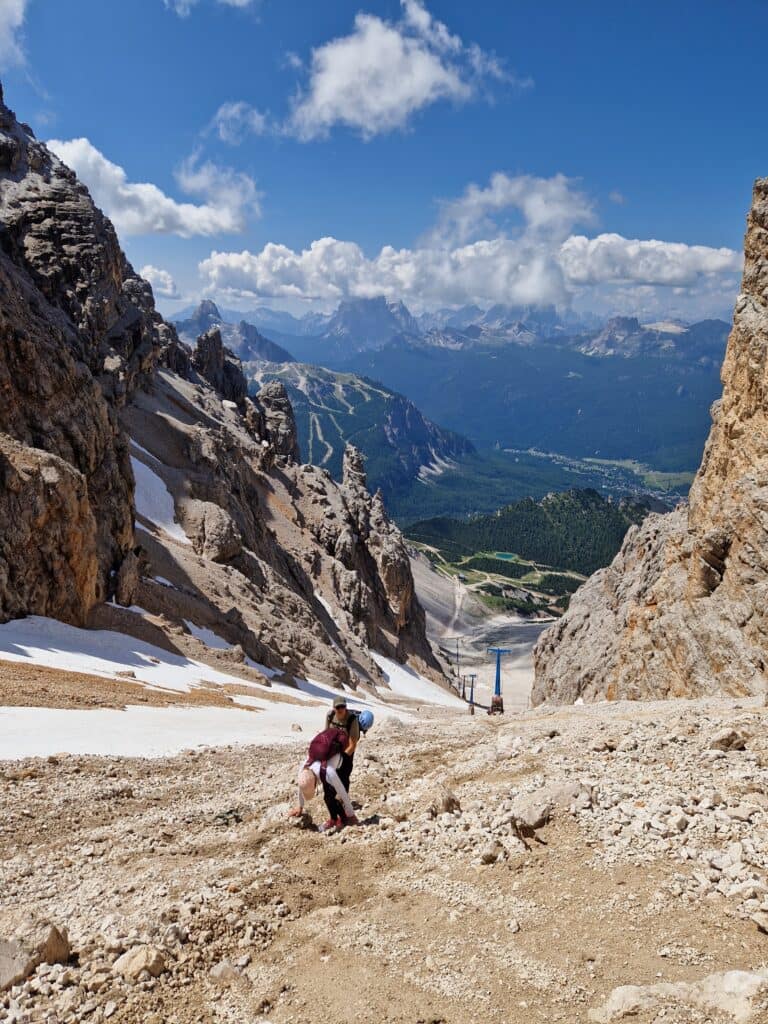
The actual climb begins from the Rifugio Son Forca mountain hut. The path leads up a steep and rocky slope where the Forcella Staunies lift used to operate, going all the way up to Rifugio Lorenzi. Both lift and Rifugio Lorenzi are now closed permanently. You can still see the lift pillars here and there. It was dismantled because it no longer met safety requirements and renovation proved too expensive. Therefore, today this section must be tackled on foot. This is the most dangerous part of the via ferrata – a rockfall zone that requires extreme vigilance.
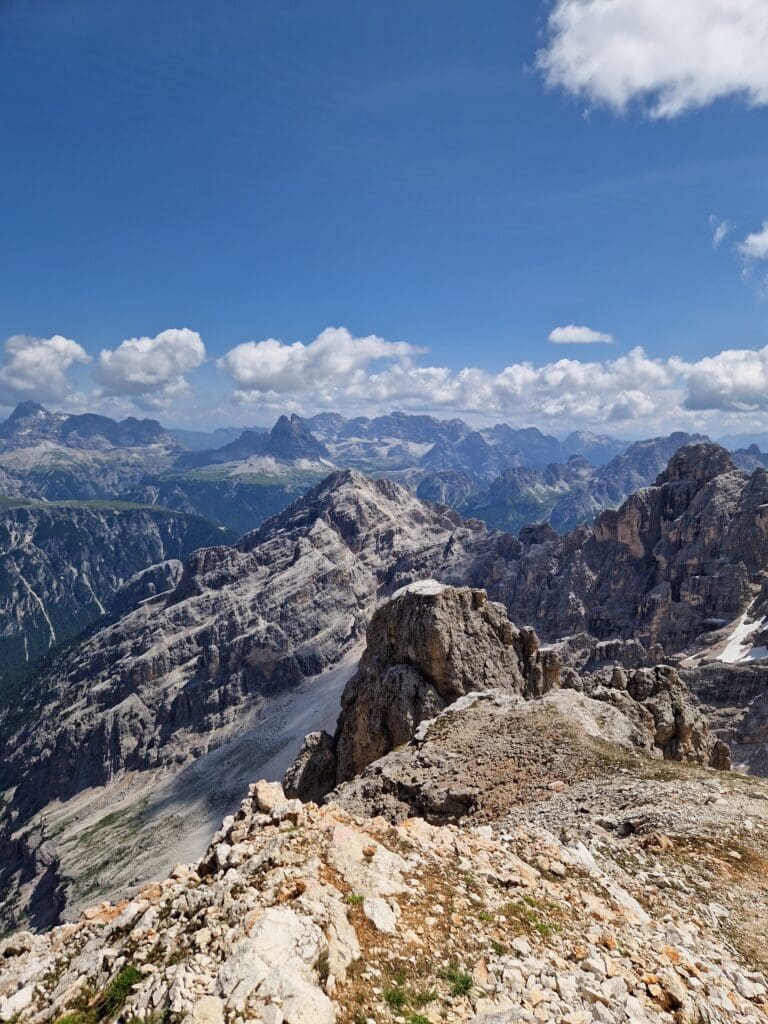
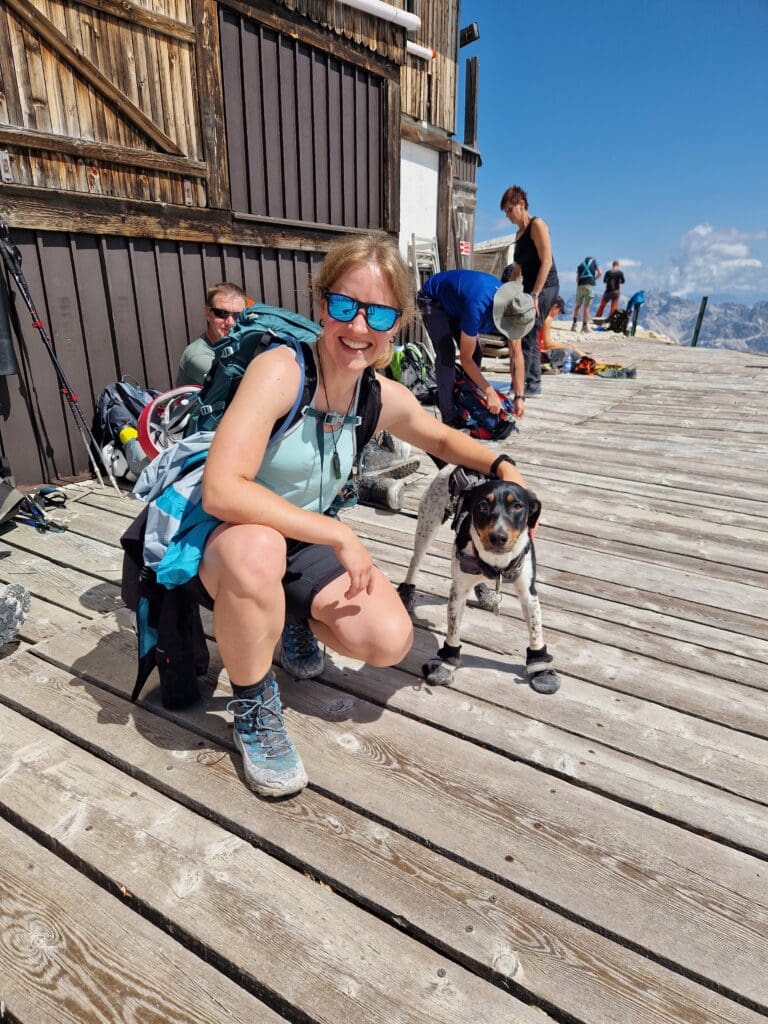
For me, this was not only the hardest but also the most “annoying” part. Because the slope is so scree-heavy, you take one step forward and slide half a step back. This goes on for three hours. However, the views at the top made all that suffering worth it. Along the way, we even met a four-legged friend! He was well-prepared – with a small backpack and hiking boots – clambering up that rocky slope just like us. We decided that if those little paws could make it to the top, so could we!
Stage #3: Rifugio Lorenzi Hut – Ponte Cristallo Suspension Bridge
Upon reaching Rifugio Lorenzi, we sat on the terrace to rest. This hut is no longer operational because it became difficult to supply it after the lift was dismantled. Still, it’s a great resting point, and most hikers stop there to hang out. The hut’s terrace is also an excellent spot to gear up, as the true via ferrata experience begins at Rifugio Lorenzi.
ℹ️ I should mention that I hiked the via ferrata Ivano Dibona in 2023. Since Rifugio Lorenzi is not maintained, it is slowly deteriorating, so its condition may differ from what I describe.
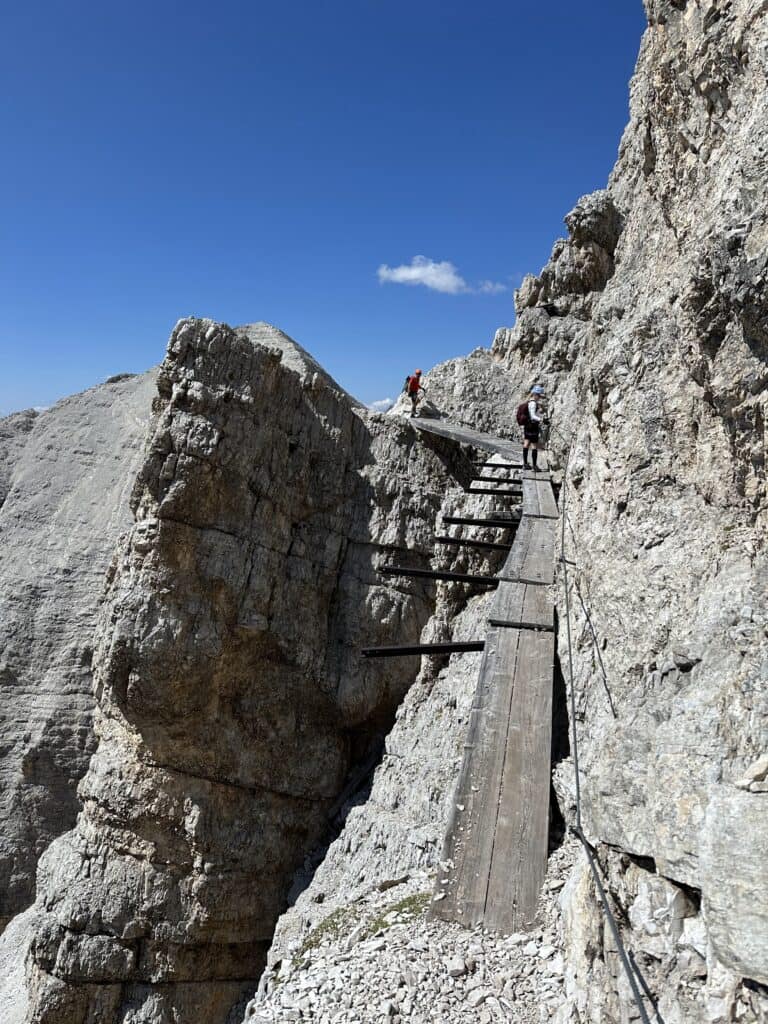
This stage is famous for the suspended Ponte Cristallo bridge – one of the most spectacular elements of the route. Hanging between two steep cliffs, the bridge is breathtaking! The view from here is priceless: deep valleys open up beneath your feet, and endless Dolomite peaks stretch toward the horizon. The bridge ends at a steep rock face equipped with ladders and cables.
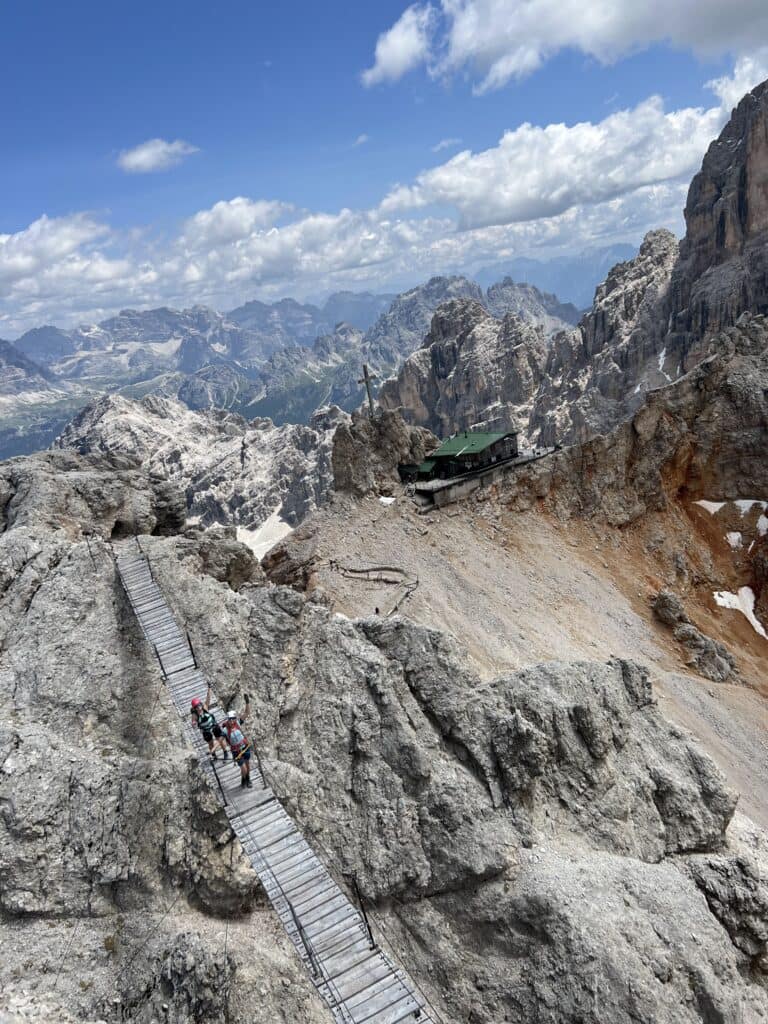
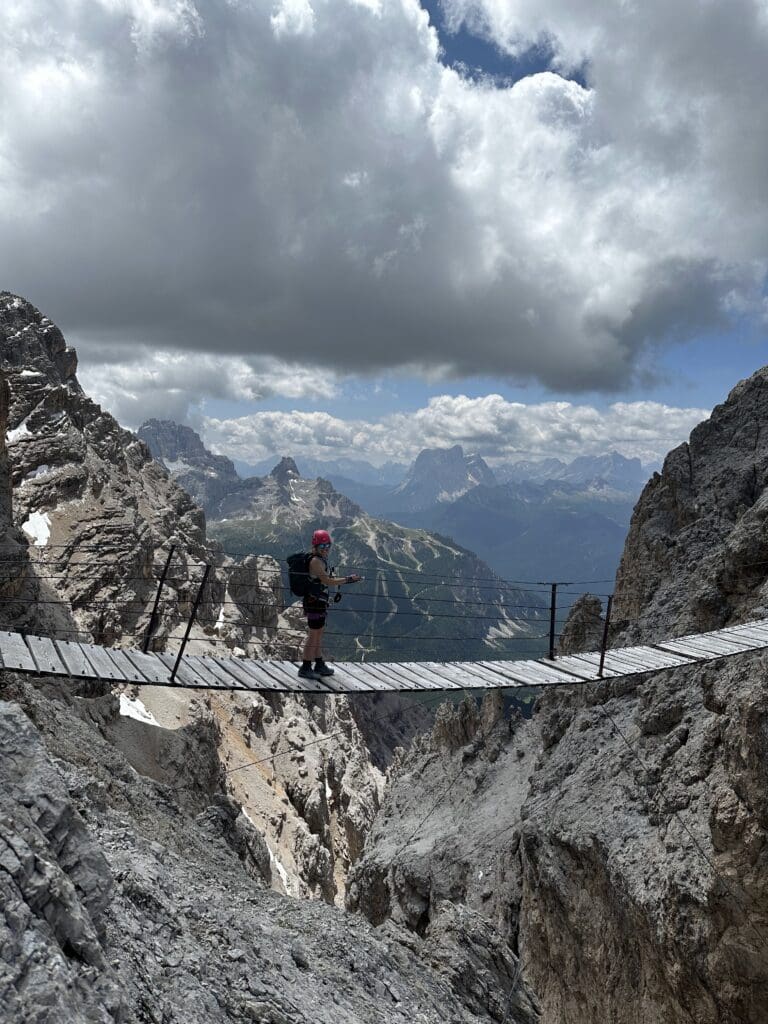
INTERESTING FACT: The Cliffhanger movie starring Sylvester Stallone was filmed on this section of Via Ferrata Ivano Dibona featuring the suspension bridge. Although the bridge is blown up in the movie, a special replica was actually built for that scene and destroyed during filming. You can watch a clip from the movie below:
Stage #4: Ponte Cristallo Bridge – Cristallino d’Ampezzo Summit
After enjoying the views from the suspension bridge, we climbed the ladders to the mountain ridge. Just when I thought we had seen the most beautiful sights, views so stunning opened up that all I could say was “wow!” I was truly speechless. It was my first time traveling in the Dolomites, and I had never seen such unique mountain silhouettes.
At the end of the ridge, before heading down, we decided to climb up to Cristallino d’Ampezzo (3,008 m). Running up to this summit and back to the main trail added about 30 minutes, but it was definitely worth it. Via ferrata cables lead all the way to the top.
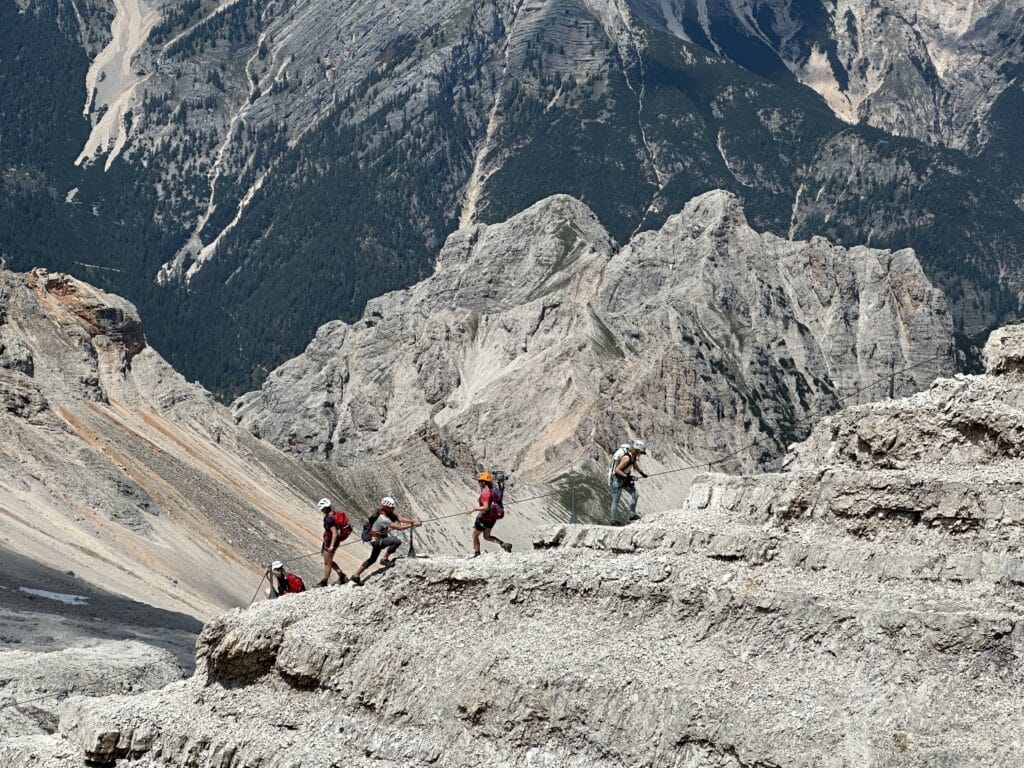
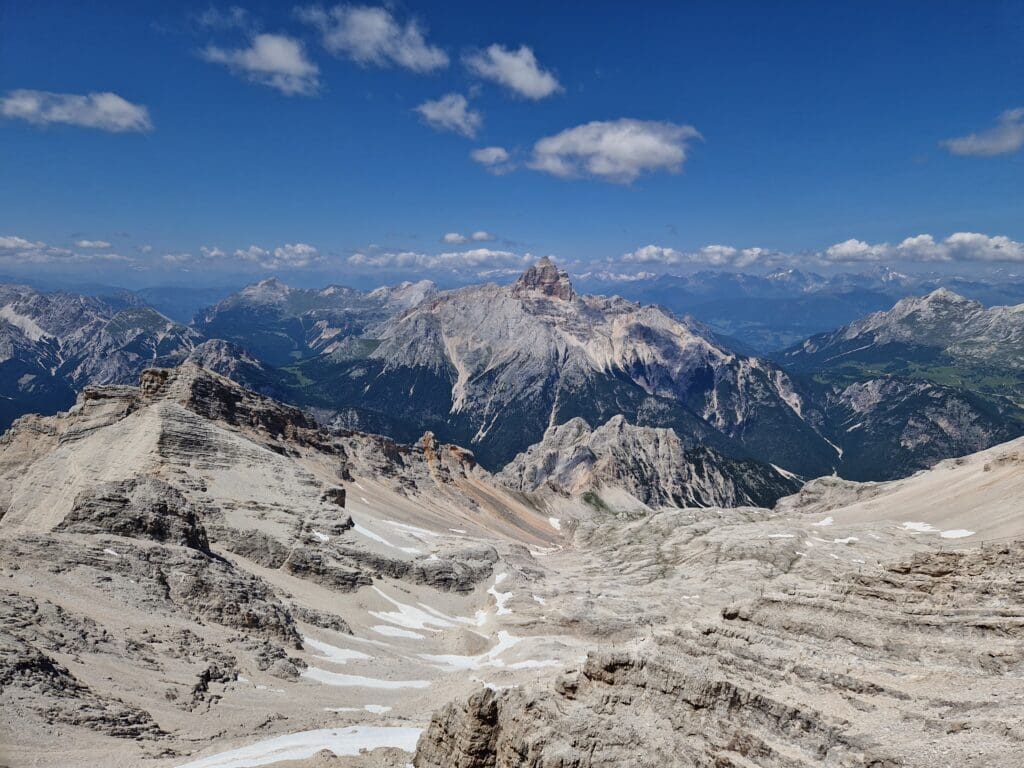
Stage #5: Cristallino d’Ampezzo Summit – Val Padeon Crossroads
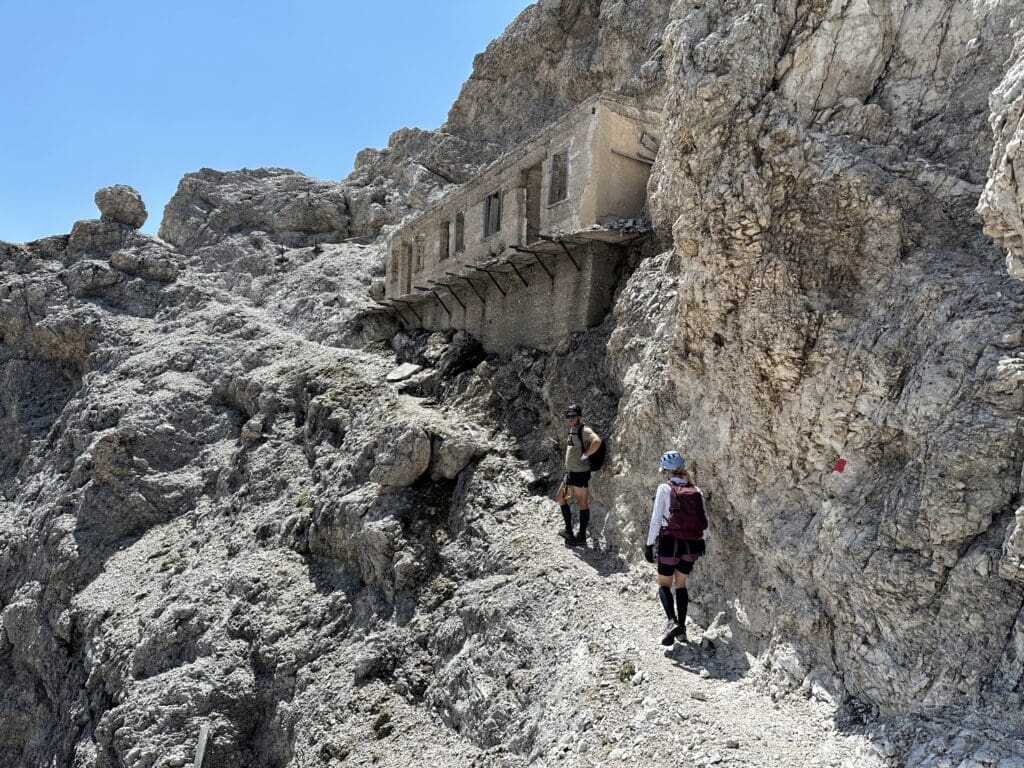
After descending from Cristallino d’Ampezzo, the trail leads across the peaks and ridges of the Cristallo group to the Val Padeon crossroads. Along the way, we admired not only the views but also the ruins of buildings left over from World War I and crossed wooden bridges built to ease movement. The entire route was fascinating because of its historical heritage!
Upon reaching Val Padeon, we turned right toward the Ospitale hut. This junction is very important because those who want to complete a loop and return to the starting point must turn left!
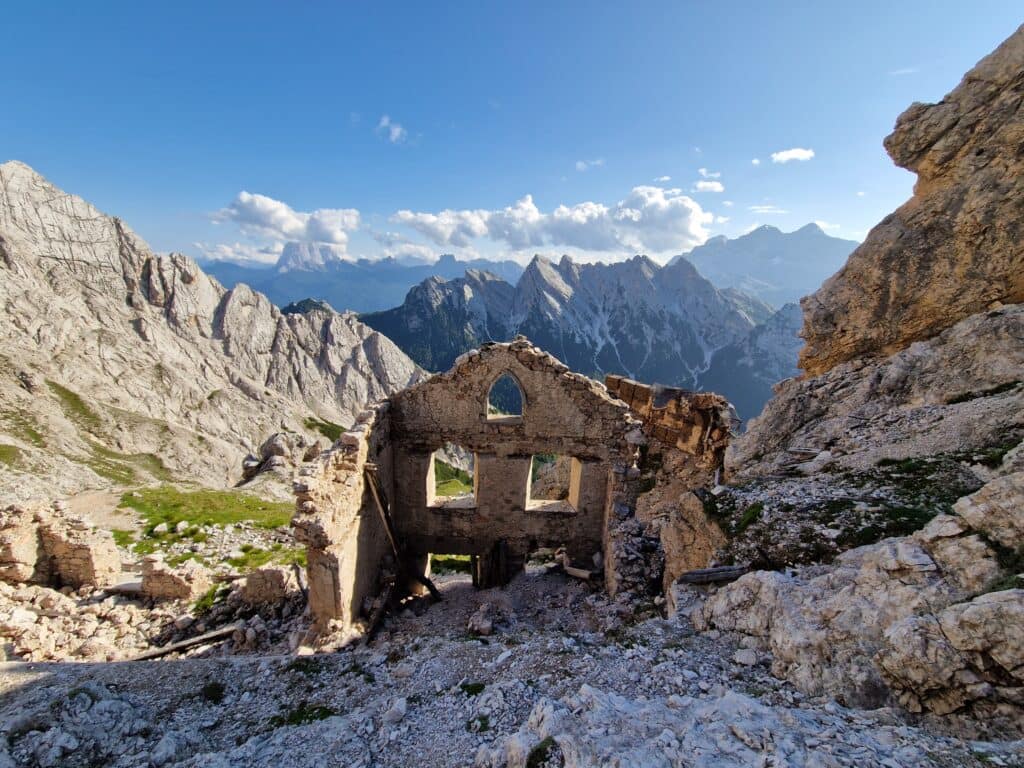
Stage #6: Descent to the Ospitale Hut
From here, the path descends to the Ospitale hut. From the hut, you can take a bus back to the town of Cortina d’Ampezzo. However, please note that the Via Ferrata is very long, and by the time you finish, the buses might have stopped running. Therefore, you must either be fast or might want to consider spending the night at the Ospitale hut.
Route Planning: Logistics Challenges
The classic Via Ferrata Ivano Dibona route begins by taking the Rio Gere lift to Rifugio Son Forca and ends at Rifugio Ospitale. If you leave your car at the Rio Gere lift, you would need a second car parked at Rifugio Ospitale to get back.
To avoid this inconvenience, there are several options:
- Drive to Rio Gere and take a bus back from Rifugio Ospitale. These run regularly to and from Cortina d’Ampezzo. However, the route is long, and you will need to hurry to catch the last bus.
- Turn into Val Padeon mid-route and return to Rifugio Son Forca. From there, take the lift back down to your car. In this case, you also shouldn’t linger too long on the route to make sure you catch the last lift down.
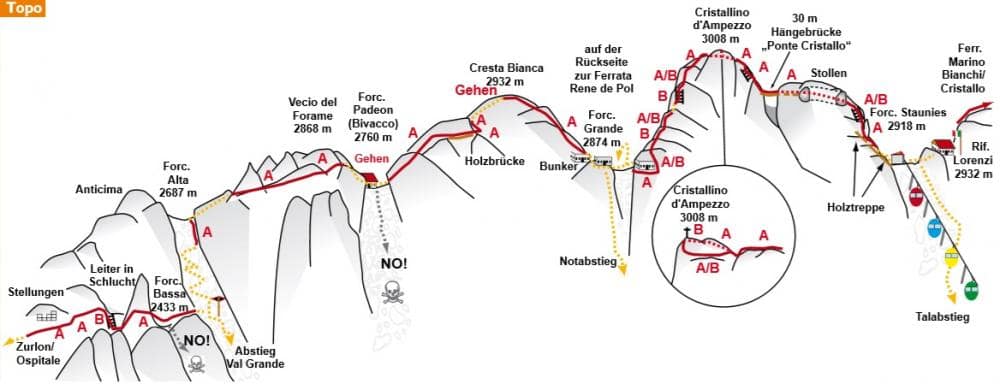
Via Ferrata Ivano Dibona Topo Map
See how it feels like to climb the via ferrata Ivano Dibona in the video below!
Have you already hiked this route? Share your impressions in the comments!
On Life and Mountains
For more via ferrata itineraries check the Via Ferratas page.