
The Marmolada mountain group is the largest and highest range in the Dolomites. Often called the “Queen of the Dolomites” for her stunning beauty and snow-capped peaks visible from afar, Marmolada also has the largest glacier in the region. This glacier makes the surrounding routes more technical, requiring mountaineering knowledge and making the experience all the more interesting. It was one such route across the glacier that we took for our winter ascent of the highest peak in the Dolomites – Marmolada Punta Penia, rising to 3,343m.
Winter Ascent of Marmolada Punta Penia: Preparation
We arrived in the Dolomites a bit earlier than planned, so we had some extra time to scout the routes we intended to climb. We were slightly worried about the low snow cover, as we planned to climb with skis. December isn’t the snowiest month in the Dolomites, so we had to abandon some of our planned routes. However, the conditions for climbing Punta Penia looked quite good.
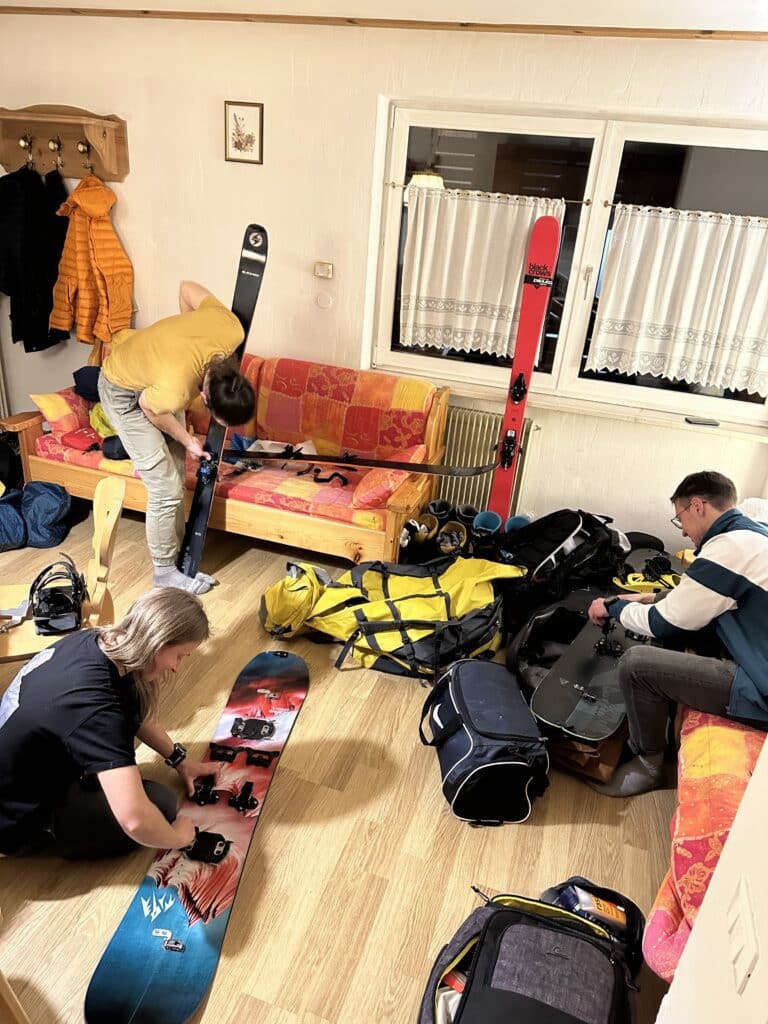
Ski Touring Gear List
- Skis / Splitboard
- Ski crampons (Harscheisen)
- Avalanche safety gear: Shovel, probe, and beacon (transceiver)
- Helmet
Mountaineering Gear List
- Rope
- Harness
- Lanyards / Via ferrata sets
- Carabiners
- Boot crampons
Winter Ascent of Marmolada Punta Penia: Route Details
Start: From Passo Fedaia to Rifugio Pian dei Fiacconi
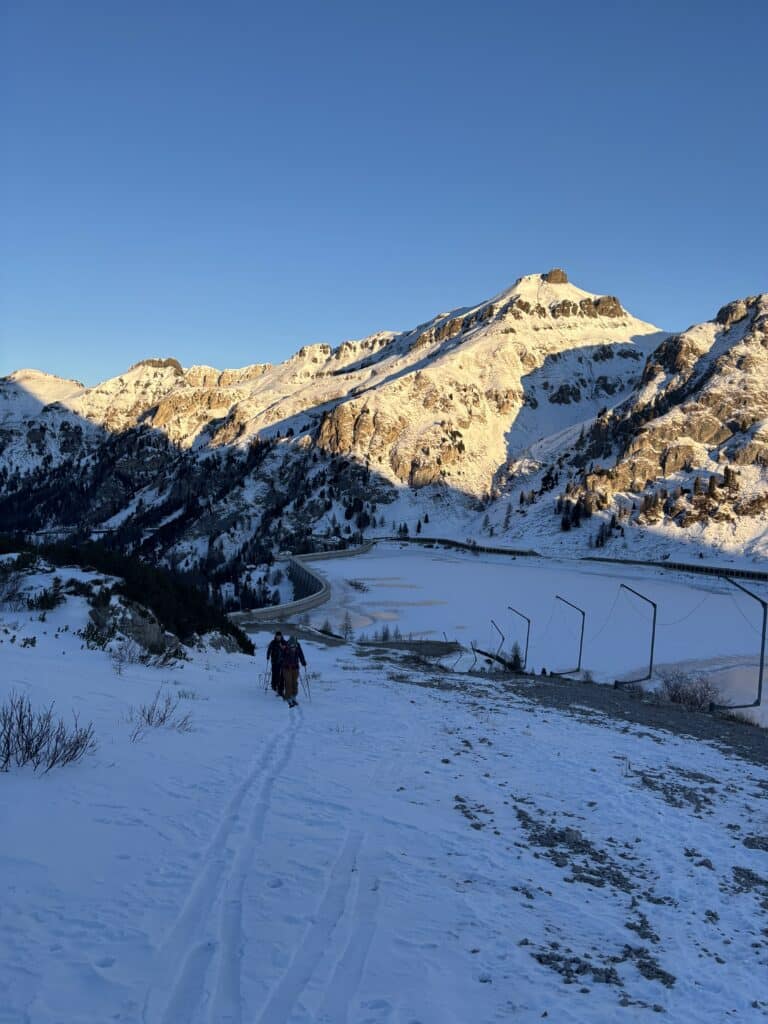
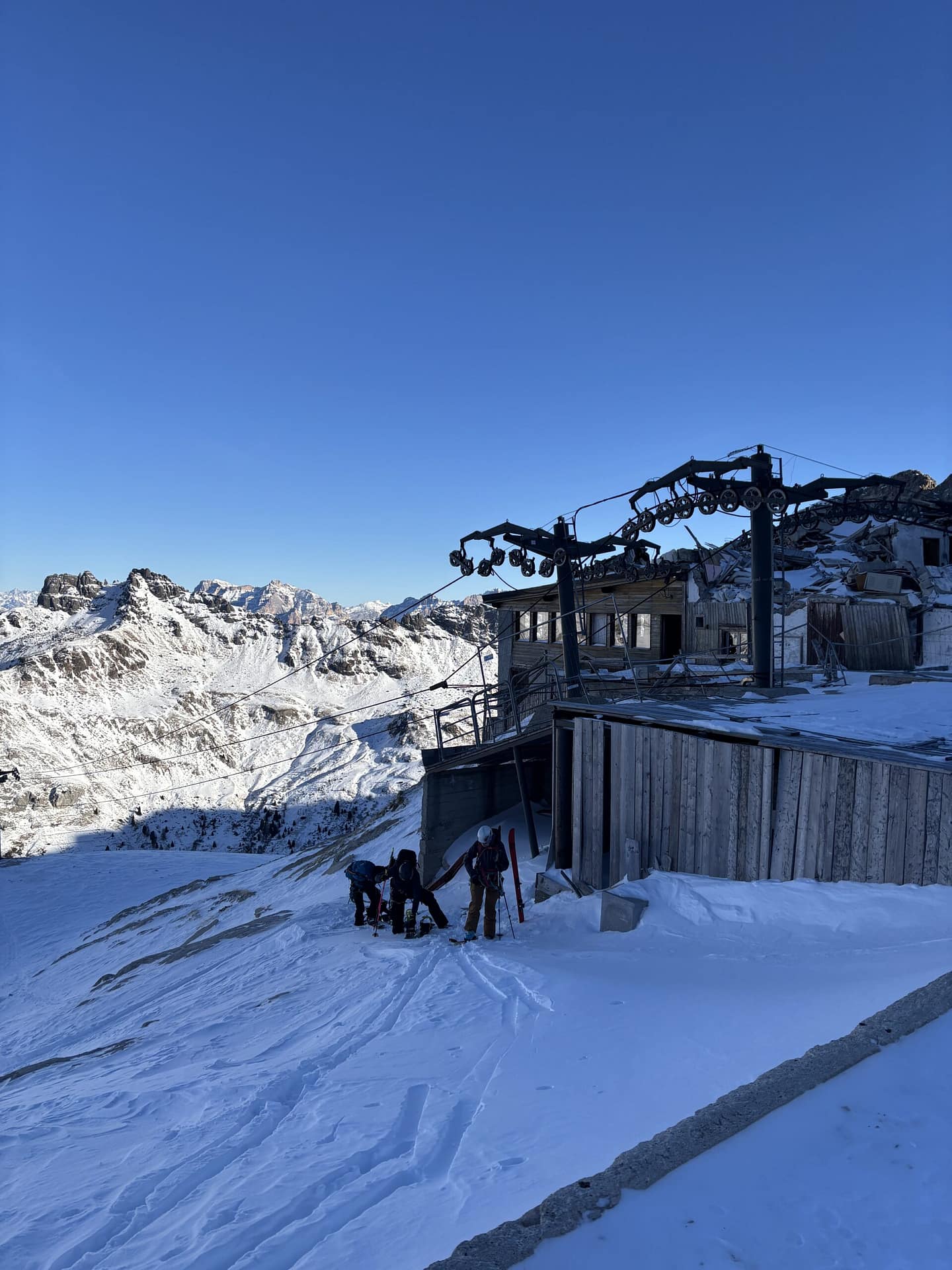
Our journey to Punta Penia began at the Fedaia Pass (Passo Fedaia). After clicking into our skis, we climbed up the ski slope toward the remains of a mountain hut Rifugio Pian dei Fiacconi. It was destroyed by an avalanche in 2020, you can read more about it in this article . Although the path to the hut was relatively simple, the lack of snow made it difficult. We frequently scraped our skis against rocks and tried our best not to slide off them! We stopped at the hut for a quick tea and chocolate break.
Crossing the Marmolada Glacier
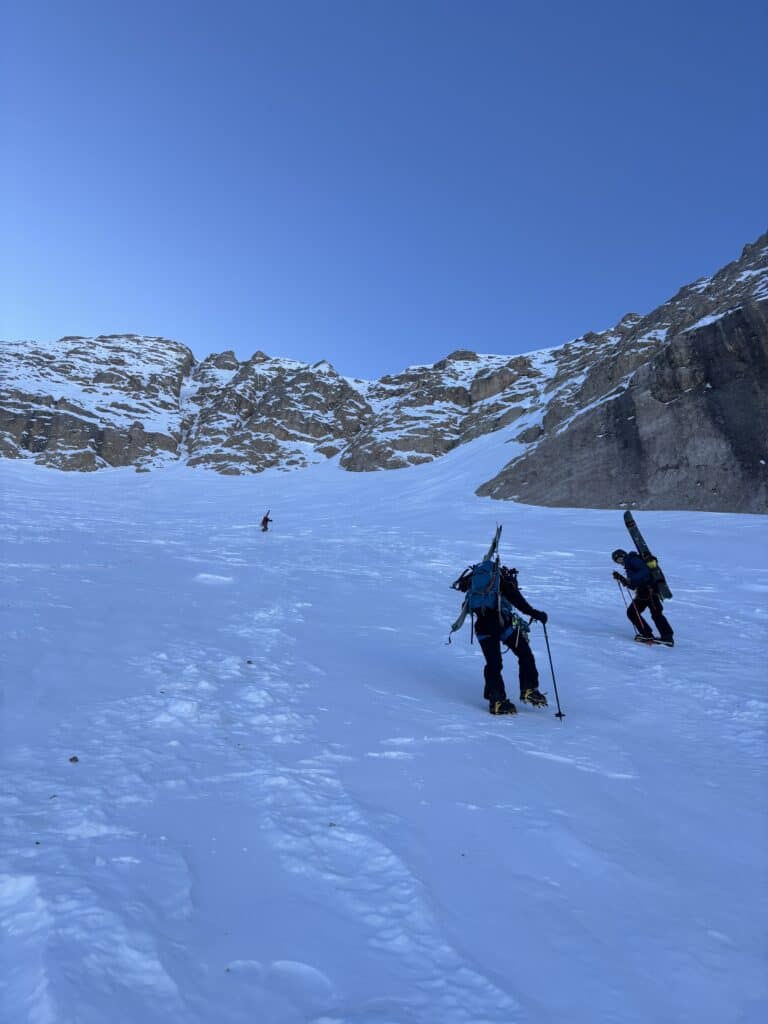
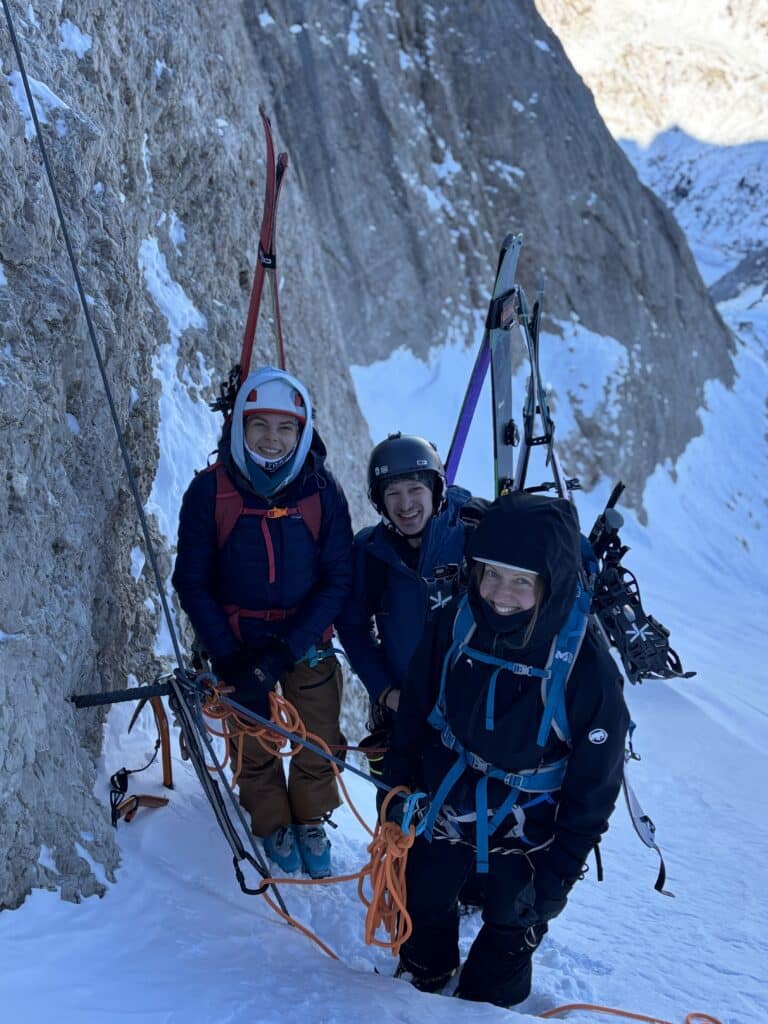
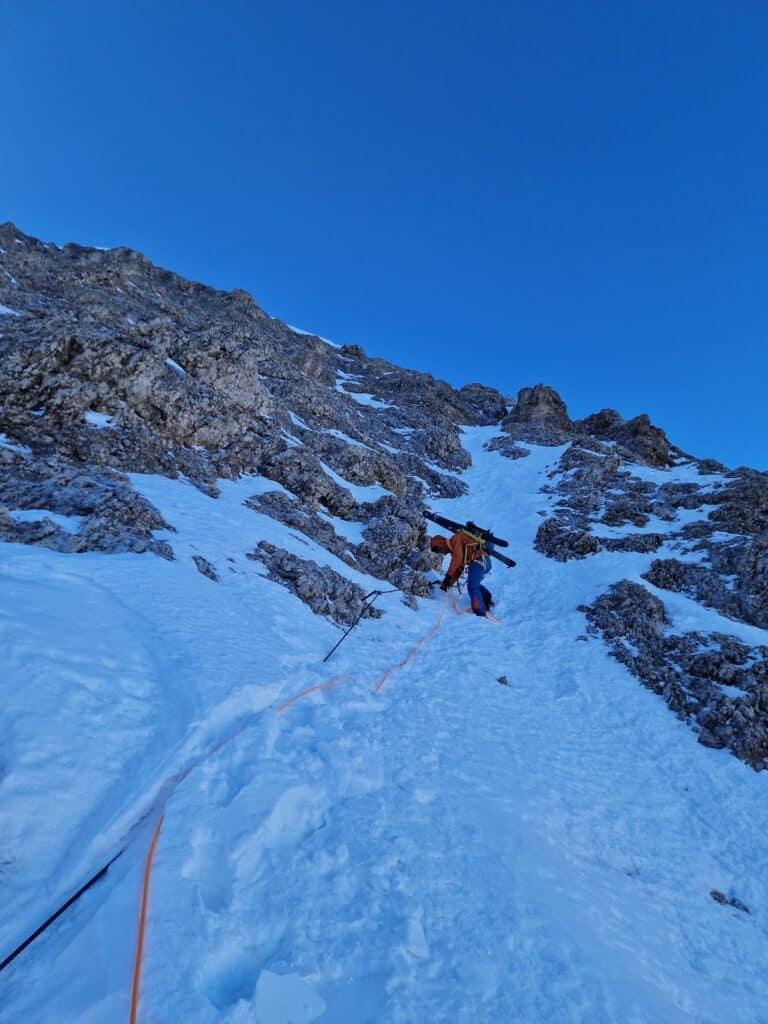
Once we reached the Marmolada glacier, the snow situation improved. We spent some time zigzagging across a soft surface. As the slope steepened, the soft snow was replaced by a hard crust. We put on our ski crampons and continued zigzagging for a while. Eventually, the slope became too steep for skis, so we strapped them to our backpacks and continued upward with boot crampons. We reached the Via Ferrata Hans Seyffer section, where we stopped for another piece of chocolate and roped up.
Marmolada Punta Penia Summit (3,343m)
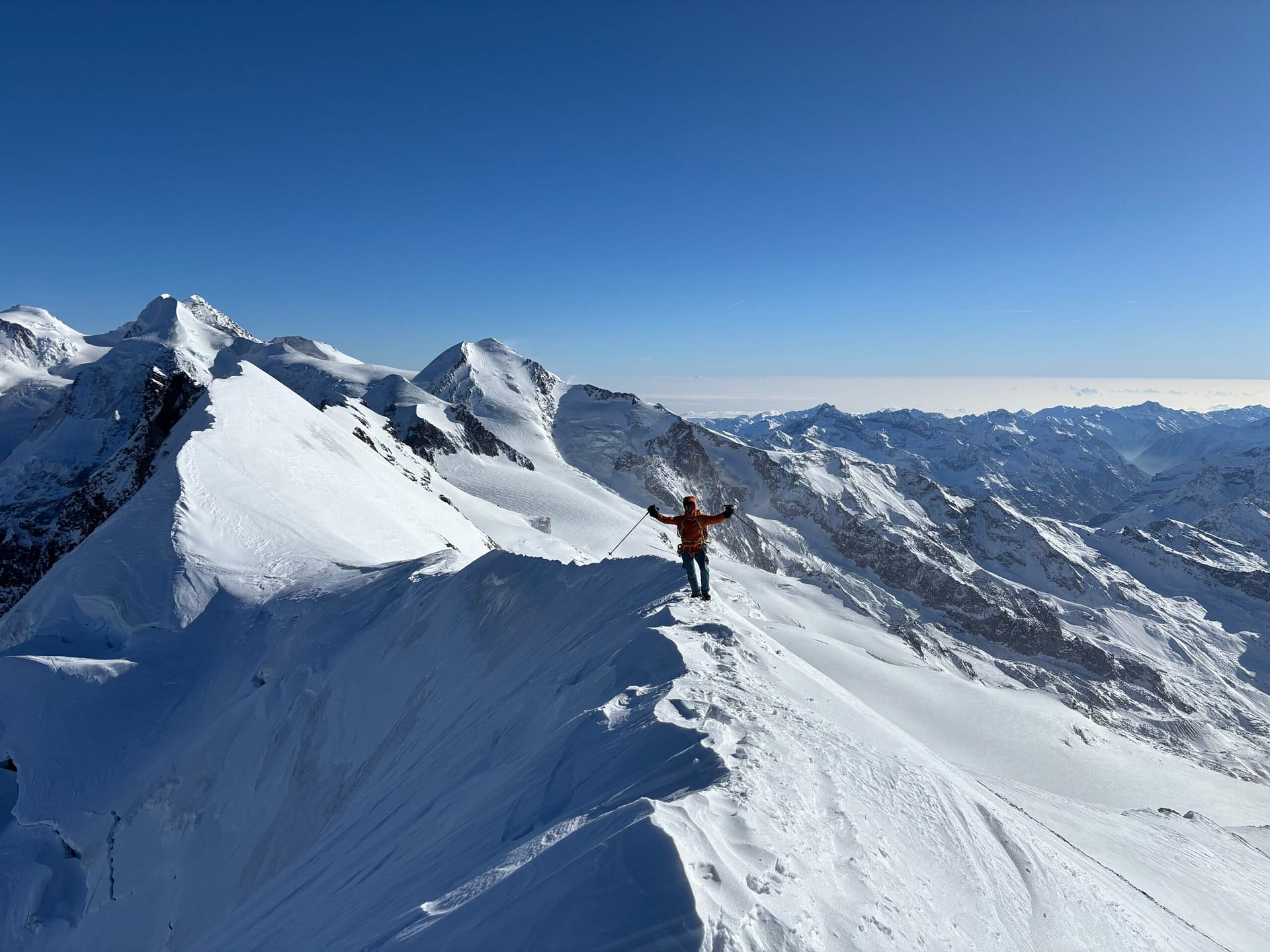
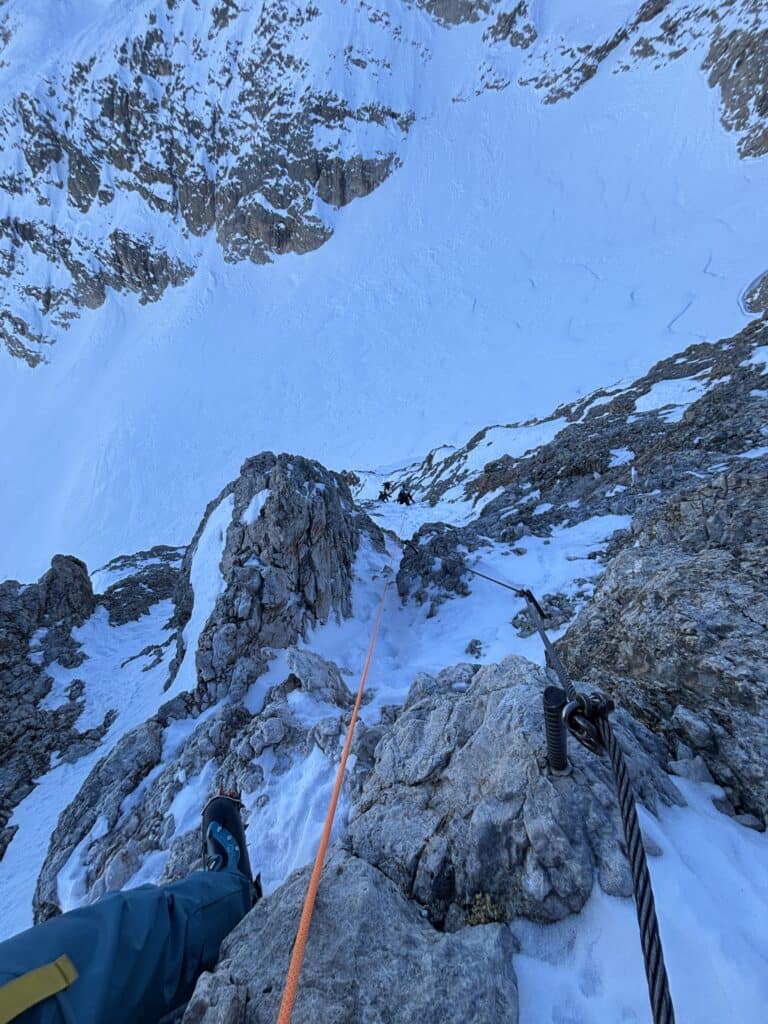
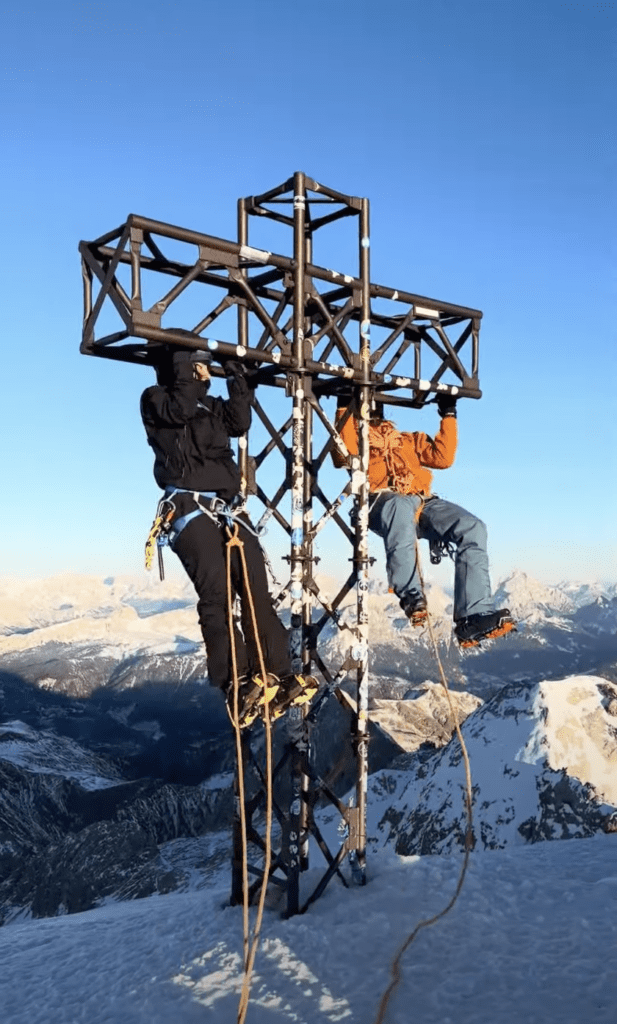
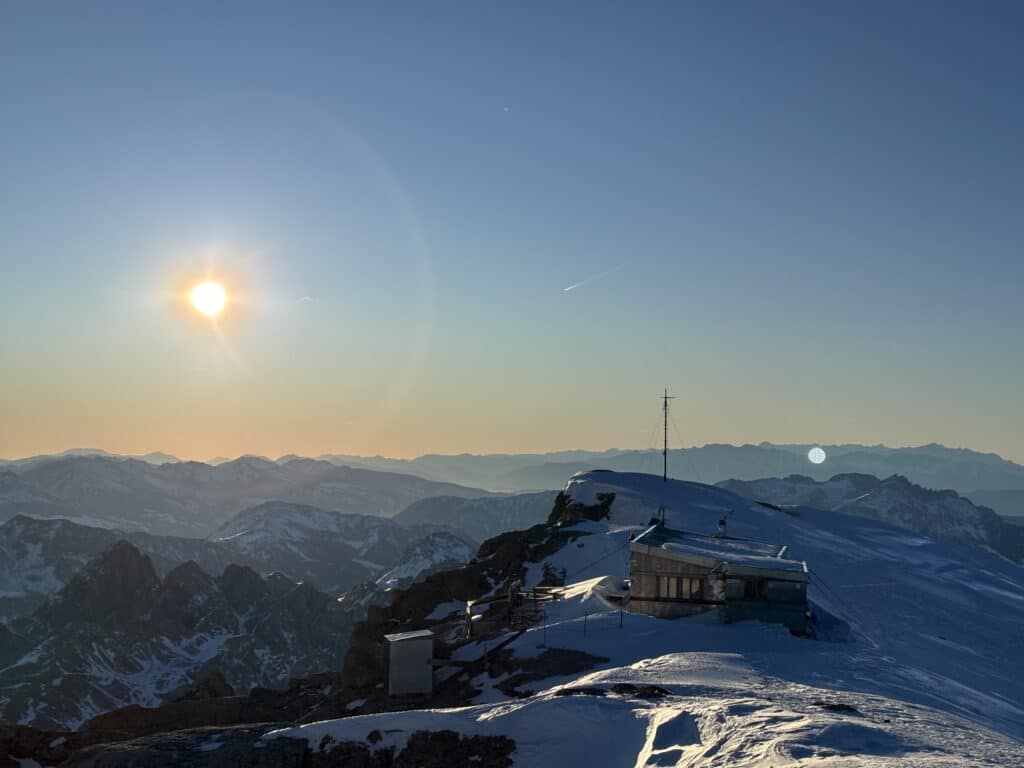
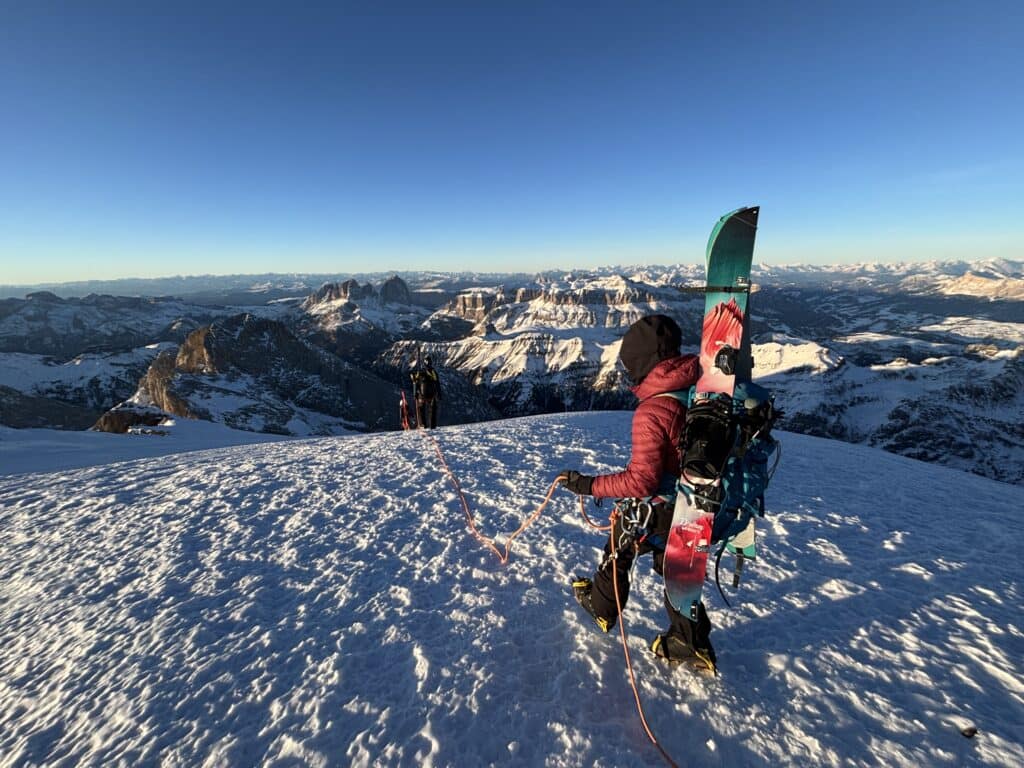
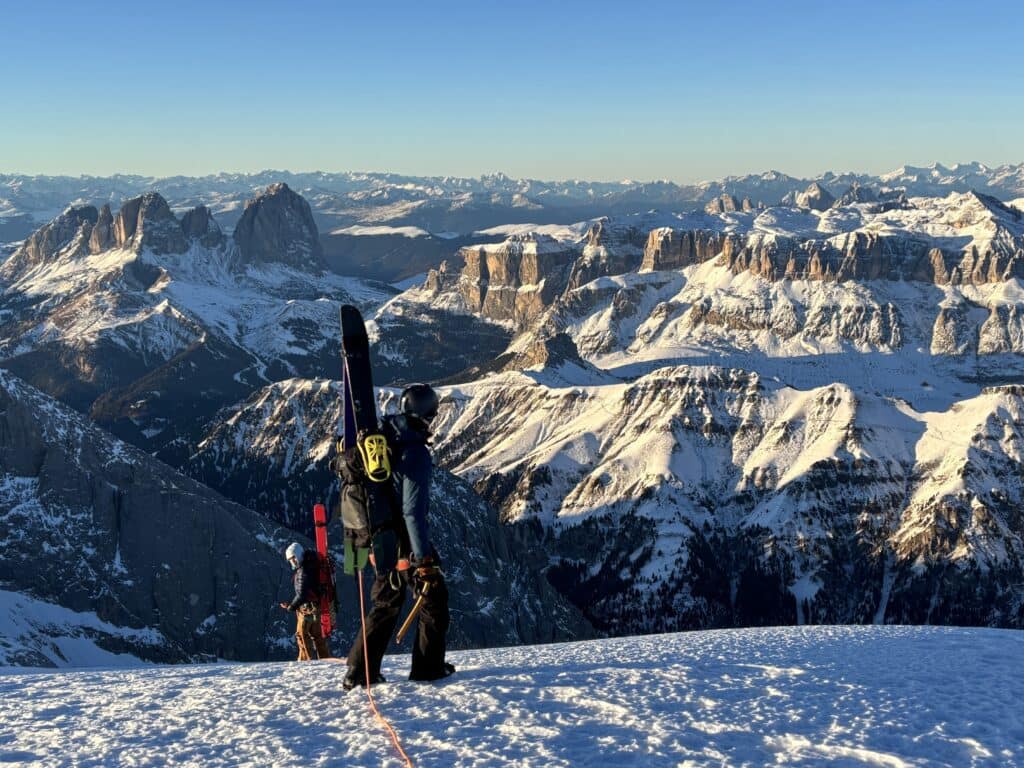
We climbed the via ferrata roped up, using simul climbing technique, clipping into the via ferrata steel cables that weren’t buried under snow. The climbing went smoothly and we soon reached the Marmolada ridge. We stepped into the sunlight for the first time that day! Soaking in the winter sun we marched toward the summit cross of Punta Penia. Didn’t stay long though — winter days are short, and we hurried to descend as much as possible while it was still light. But before rushing off, we managed to fit in a few pull-ups at the top! And, of course, we ate some more chocolate.
The Descent from Marmolada Punta Penia
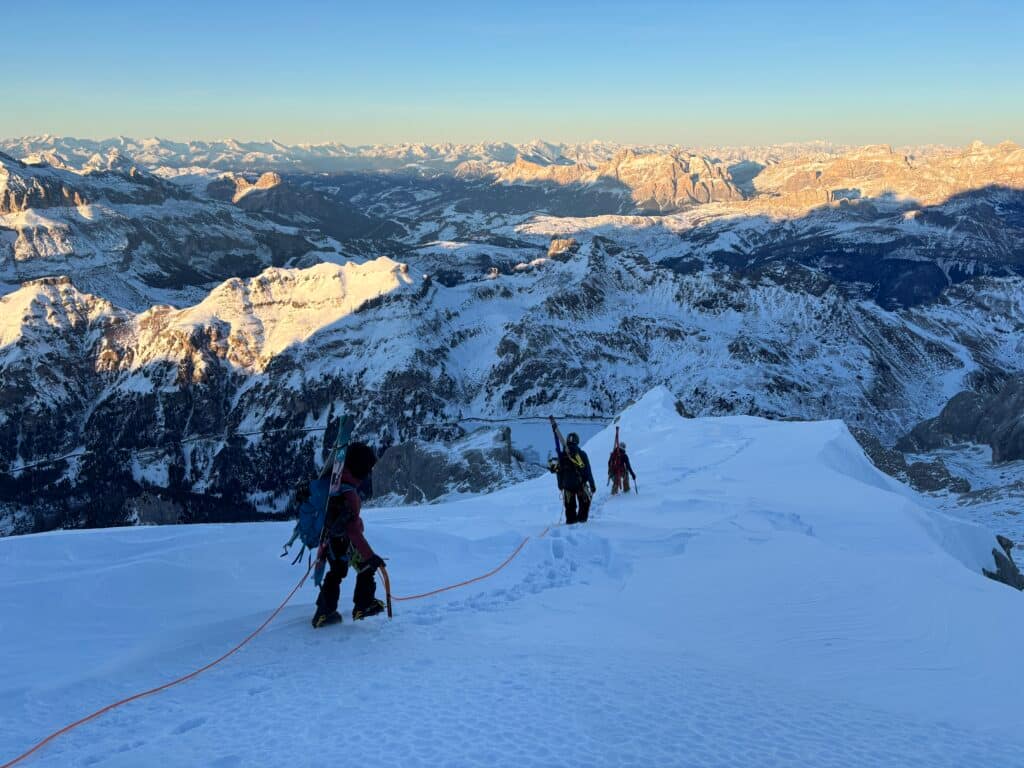
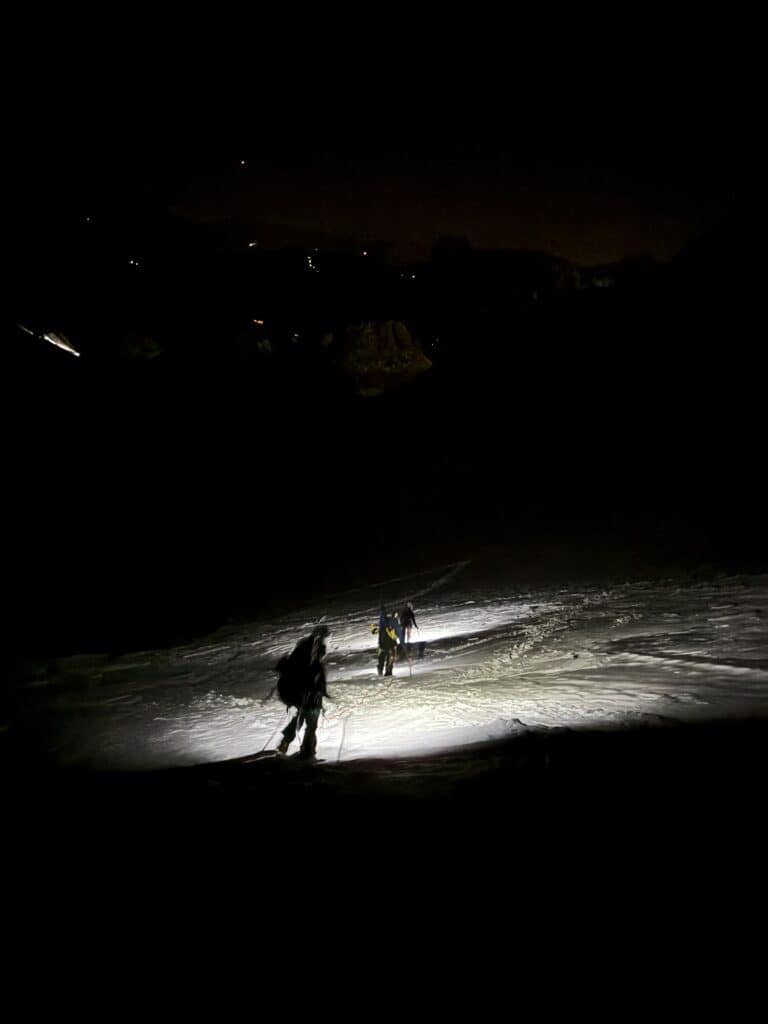
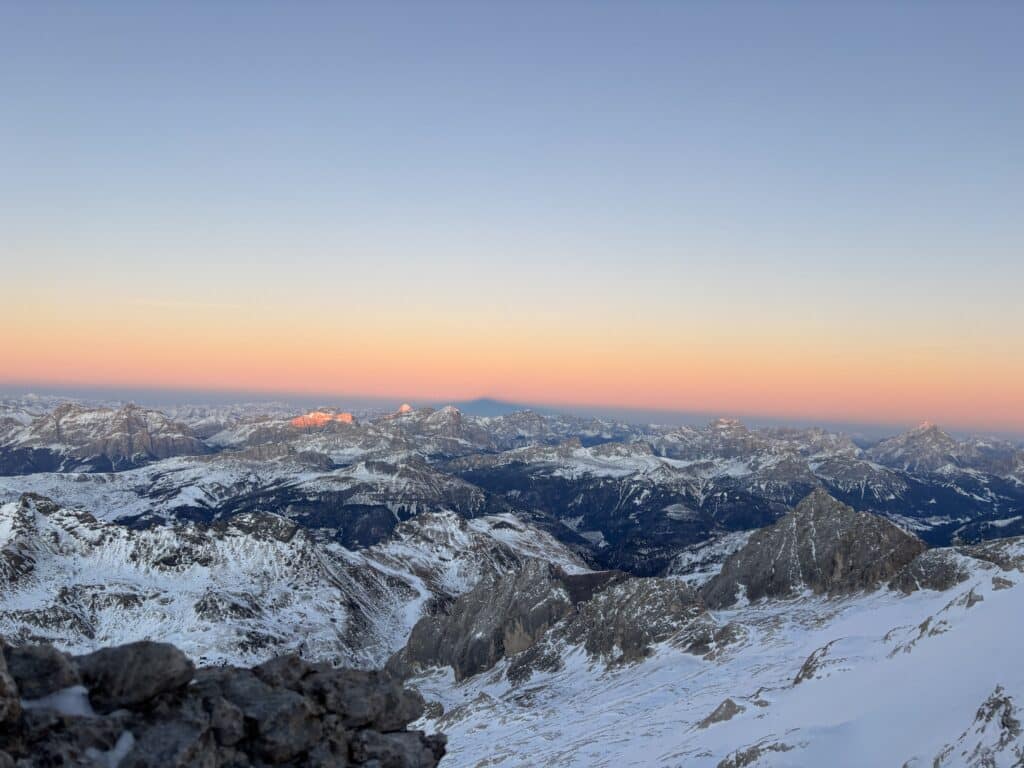
We descended via the same route. While climbing down the ferrata we were alos rewarded with one of the most stunning sunsets I’ve ever seen. The triangular shadow of Marmolada stretched out in the distance while we managed to finish the descent of via ferrata Hans Seyffer during the last light. We didn’t dare descend on skis or snowboards due to the darkness and questionable snow quality, so went down on foot. The stars guiding us in the sky and thoughts of dinner kept us going!
Route Map
- Via Ferrata Ferrata Hans Seyffer (AllTrails):
Fun Fact: Marmolada’s “Ice City”
During the First World War (1915–1918), the Italian and Austro-Hungarian armies fought in the Dolomites, and the Marmolada glacier became a vital strategic location. To protect themselves from Italian attacks, Austrian soldiers dug a complex system of tunnels—about 12 kilometers long—under the glacier. It housed barracks, warehouses, a kitchen, and even a hospital. This unique underground base was nicknamed the “Ice City.” Due to climate change, the glacier is shrinking, and these historic tunnels are slowly disappearing. Some parts have already collapsed or been exposed by melting ice, but fragments still exist. The Marmolada War Museum at the Punta Serauta station exhibits various artifacts found within these tunnels.
Have you ever visited Dolomites in winter? Share your experiences and suggested routes!
On Life and Mountains